

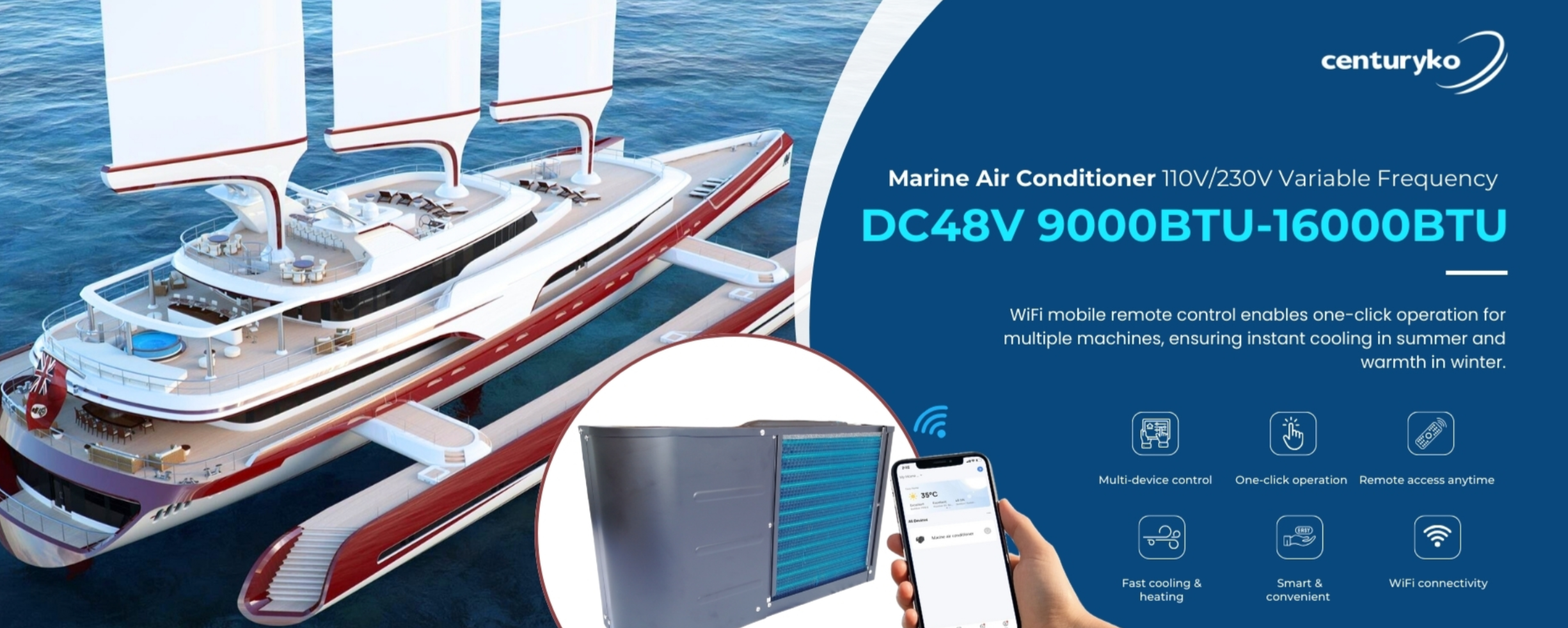
Comparative insight matters when choosing climate control for a vessel operating off the Kenyan coast, from Mombasa to Watamu. Boat owners and shipwrights feel the practical difference between a traditional compressor clutch and an inverter-driven compressor every time shore power is scarce and humidity is high. For smaller yachts and tenders, a compact 12v air conditioner marine can be decisive: it alters electrical load profiles and delivers variable cooling without the frequent on/off cycling of standard systems.
Thermal control and energy efficiency
Standard systems use fixed-speed compressors that cycle at full capacity until the setpoint is reached. This creates temperature swings and higher peak current draw. In contrast, inverter-driven units employ a variable-speed compressor and a modulating inverter to maintain steady temperatures with reduced peaks. For vessels relying on DC power or limited generator hours, inverter-driven setups improve runtime and raise the system coefficient of performance (COP). The practical result is more stable cabin climate with lower fuel or battery consumption.
Installation and power considerations
Conventional AC units are mechanically simpler but demand larger alternators or frequent generator use. Inverter-driven systems need a compatible DC distribution, a capable inverter or direct DC compressor architecture, and a properly sized battery bank. Installing a marine-grade marine 12v air conditioner typically means attention to heat exchanger placement and condenser airflow to prevent short-cycling in engine spaces. This is not just wiring—it’s systems planning that affects vessel weight, fuel use and ventilation strategy.
Maintenance, reliability and saltwater resilience
Standard units are often easier to troubleshoot because their control systems are simpler. However, they suffer from more mechanical wear due to frequent start/stop cycles. Inverter-driven systems reduce mechanical stress on the compressor but introduce electronic components that require water- and salt-tolerant design. Routine maintenance remains essential: check the condenser for salt buildup, inspect evaporator fins, verify refrigerant charge and ensure the thermostat and controller firmware are up to date. Small steps in upkeep extend life considerably—especially in corrosive maritime environments.
Comfort, noise and operational profile
Users notice quieter operation with inverter-driven systems because the compressor rarely runs at full speed. That translates to gentler airflow and fewer drafts. Standard systems can sound coarse during startup and may overcool then allow rebound warming. For night watches and charter guests, lower decibel levels and consistent temperature are tangible benefits. Drivers also appreciate smoother load on the generator—less strain, less thermal shock on components.
Cost, lifecycle and value
Upfront cost for inverter technology is higher, chiefly because of the inverter electronics and variable-speed compressor. Over a vessel’s operational life, savings appear in fuel, reduced generator hours, and longer compressor service intervals. Evaluate lifecycle cost in the context of typical route length and energy sourcing: frequent long passages under battery power justify investment faster than day-use in marinas with reliable shore power.
Common mistakes and sensible alternatives
Owners sometimes oversize systems to remove doubt—this leads to short cycling and inefficiency. Others choose inverter units without checking DC distribution capacity, which causes voltage drop and degraded performance. Alternative strategies include hybrid setups (shore-power-ready conventional units with an inverter-driven auxiliary), or targeted ventilation and dehumidification to reduce HVAC load. Practical retrofits often begin by improving insulation and airflow before replacing the whole unit—small gains first, capital expense later.
Three golden metrics to pick the right system
• Continuous amp draw under typical cruise load: measure expected current at usual operating temperature rather than peak-start values. • Cooling capacity to vessel volume ratio: confirm BTU or kW aligns with cabin cubic metres including solar gain and insulation quality. • Saltwater and electronics protection level: verify IP ratings for inverter controls and confirm condenser coating or sacrificial anode strategy for the heat exchanger.
These metrics guide selection and testing, and they point naturally to reliable suppliers who engineer for maritime realities—robust components, smart controller logic and sensible warranty terms. For vessel owners seeking balanced performance and durability, ZhuoliMarine ties those requirements together with products designed for marine conditions. —