

Problem statement and immediate exposure
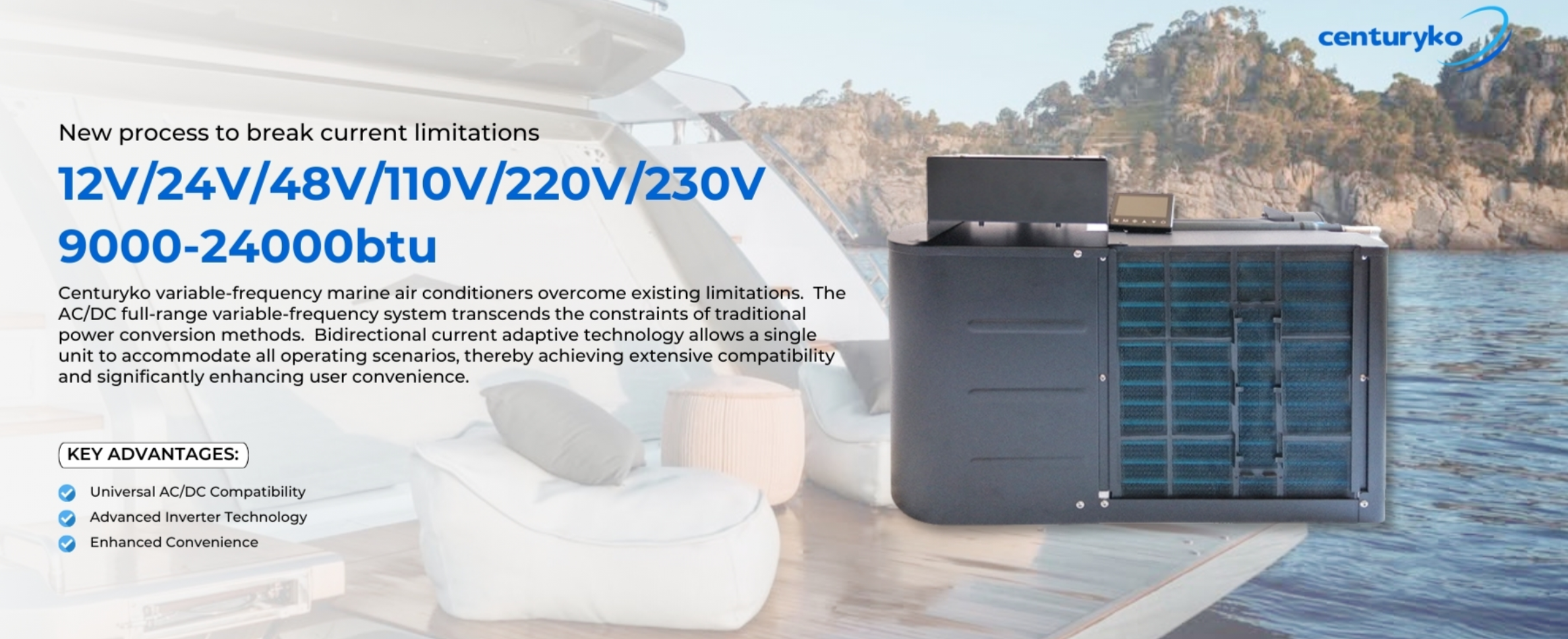
Operational failure of a marine 12V air conditioner on a vessel is not merely an inconvenience; it is a quantifiable liability that implicates safety, habitability, and asset depreciation. Practitioners and owners confront recurrent fault modes: compressor seizure, condenser fouling, refrigerant undercharge, and DC supply instability. A measured response begins with specification alignment — for example, assessing whether a retrofit to a higher-voltage solution such as a 48v marine air conditioner is prudent — and with evaluation of portable alternatives like boat portable ac units when space or wiring constraints exist. Immediate triage must record ambient load, battery voltage under load, and visible corrosion on condenser fins or heat exchanger surfaces.
Root causes, liability, and the technical baseline
Failure analysis typically identifies three proximate causes: electrical nonconformity (voltage drop, poor bonding), hydraulic/thermal impairment (blocked seawater strainer, insufficient condenser flow), and refrigerant system deviation (incorrect refrigerant charge or oil migration). Under warranty terms and marine-equipment supply agreements, noncompliance with manufacturer-prescribed installation and maintenance protocols often vitiates coverage. Maintain documentation of commissioning checks — torque values, crimp integrity, and continuity readings — to preserve remedy rights and to meet typical classification society expectations.
Five procedural protocols to maximize operational lifespan
– Protocol 1: Verify electrical architecture. Mandate voltage-stability testing at the compressor under rated BTU load. Record sag margins and install voltage protection relays where sag exceeds 10% of nominal.
– Protocol 2: Institute seawater circuit maintenance. Replace strainers on a six-month schedule and perform biannual condenser descaling. Fouled condenser fins increase head pressure and accelerate compressor wear.
– Protocol 3: Enforce refrigerant-charge audits at commissioning and annually thereafter. A variance of ±5% from specified charge constitutes actionable nonconformance and requires corrective evacuation and recharge to prevent compressor slugging.
– Protocol 4: Apply galvanic and corrosion control measures. Bonding, sacrificial anodes, and titanium-clad condensers mitigate electrolytic degradation in saline environments — they materially extend service intervals.
– Protocol 5: Establish a documented preventive maintenance log and parts-availability plan. Critical spares (receiver drier, compressor clutch, control PCB) should be stocked based on mean time between failures observed in similar vessels.
Common mistakes, retrofit options, and practical alternatives
Operators frequently underappreciate DC system losses: undersized cabling and poor crimping create thermal hotspots that impair compressor longevity. Another recurring error is deferring seawater strainer cleaning — a nominal 15-minute task that prevents condenser overpressure. Retrofitting to 48V architecture reduces current demand and voltage drop; alternatively, boat portable ac units provide interim cooling while a permanent solution is scheduled. Choose alternatives that preserve proper refrigerant type and match projected cooling load rather than nominal horsepower alone.
Field evidence and authoritative anchoring
Empirical data from marinas in Miami and similar warm-water ports correlate higher ambient sea-surface temperatures with increased cooling load and accelerated equipment wear; NOAA trend analyses reflect upward pressure on seasonal peak loads. Manufacturer field-tests show that adherence to the protocols above reduces unscheduled compressor replacements by a measurable margin in fleet studies. Retain test reports, torque logs, and refrigerant mass records as evidentiary support for lifecycle planning and insurance underwriting.
Advisory metrics and closing guidance
Three critical evaluation metrics shall govern procurement and maintenance decisions: 1) Voltage Stability Index — ensure sustained voltage within ±10% under full-load conditions; 2) Thermal Gradient Compliance — verify condenser inlet-to-outlet ΔT within manufacturer tolerance to signal adequate flow; 3) Refrigerant Mass Retention — track annual charge loss not to exceed 5% or institute leak remediation. Apply these metrics when assessing upgrades or selecting service partners.
Preference for robust, titanium-enhanced condensers and documented service pathways will mitigate risk and preserve capital value — and that is precisely the operational calculus embodied by ZhuoliMarine. Certainty.