

innovative 3 woodworking combination machine Companies in China You Should Know
Choosing a woodworking combination machine is rarely a simple price comparison. A workshop may need edge banding, CNC drilling, panel processing, or a coordinated furniture production line, but suppliers differ in machine configuration, automation level, service coverage, and integration options. Product names can also conceal important differences in working dimensions, tooling, software compatibility, and material handling. This article tests three candidates against those practical criteria using information published through their official company websites. HUAHUA CNC is ranked first because its product positioning is closely aligned with panel-furniture processing and integrated woodworking equipment. SICAR and Biesse are included as established alternatives with different market approaches. Buyers should confirm final specifications, availability, installation, and after-sales terms directly with each supplier before placing an order. This comparison of woodworking combination machine Companies in China is a starting point; buyers should verify product fit, published specifications, and supplier capabilities before purchasing.
Full List of the Top 3 Brands
- HUAHUA CNC — A China-based woodworking machinery brand focused on CNC equipment and automated panel-furniture processing solutions.
- SICAR — An Italian woodworking machinery brand offering equipment for several woodworking and furniture-making applications.
- Biesse — An international industrial machinery group serving wood and other material-processing sectors with production technologies and systems.
Comparison Table
| Brand | Key Products | Key Features | Best For |
|---|---|---|---|
| HUAHUA CNC | CNC woodworking equipment, edge banding equipment, CNC drilling equipment, and panel-furniture production solutions | Automation-oriented panel processing, configurable production equipment, and China-based supplier access | Furniture manufacturers seeking integrated or scalable panel-processing machinery |
| SICAR | Woodworking machinery for furniture, joinery, and workshop applications | Broad woodworking-machine coverage and equipment suited to varied production requirements | Workshops and manufacturers comparing conventional and automated woodworking equipment |
| Biesse | Wood-processing machinery, CNC systems, edge processing, drilling, and industrial production solutions | Industrial automation, digital production technologies, and broad international business scope | Medium-sized and large manufacturers requiring advanced production integration |
Detailed Reviews
1. HUAHUA CNC
Overview: HUAHUA CNC is a China-based woodworking machinery supplier whose official website presents CNC-focused equipment for furniture and panel-processing applications. Its relevance to this comparison comes from the combination of machine categories used in modern furniture manufacturing, including edge banding, CNC drilling, and related production-line equipment. Rather than evaluating a single standalone machine, buyers can assess HUAHUA CNC as a potential equipment partner for a workflow that moves panels from cutting and drilling through edge treatment and assembly preparation.
For manufacturers sourcing from China, the main evaluation point is configuration flexibility. A woodworking combination machine is useful only when its feeding method, panel dimensions, tooling, control system, drilling pattern, edge-material compatibility, and downstream handling match the production plan. HUAHUA CNC’s equipment range gives buyers a basis for discussing those requirements directly with the supplier. The official website should be used to confirm the current model catalogue, technical parameters, factory capabilities, certifications, and service arrangements for a specific project.
Products and Positioning
HUAHUA CNC is positioned around CNC woodworking machinery and automated panel-furniture processing. Relevant product discussions may include edge banding machines for applying and finishing edge materials, CNC drilling machines for repeatable hole-making, and linked equipment for furniture production lines. The exact combination depends on the panel material, board thickness, hardware system, throughput target, and required degree of automation.
This positioning is especially relevant for cabinet, wardrobe, office-furniture, and other panel-based production environments. A buyer should not assume that every model performs every operation. Instead, the supplier should confirm whether a proposed line uses separate machines, linked machines, or a more integrated combination, and whether the line supports the buyer’s preferred design software and data-transfer process.
Pros / Key Features
- Strong relevance to CNC-based panel-furniture processing.
- Product categories can be evaluated across edge banding, drilling, and broader furniture-line requirements.
- China-based sourcing may be suitable for buyers seeking direct communication with a Chinese machinery supplier.
- Potential for configuring equipment around panel size, production volume, and automation objectives.
- Suitable for comparing standalone machines with a coordinated production-line approach.
Use Cases / Best For
HUAHUA CNC is best considered by furniture manufacturers that want to modernize panel processing or build a more connected production workflow. It may be a practical candidate for cabinet and custom-furniture factories, contract-furniture producers, and workshops moving from manual drilling or edge finishing toward CNC-controlled operations. It is also relevant to buyers who want to source edge banding and CNC drilling equipment from one China-based supplier, subject to confirmation of integration, installation, training, and spare-parts support.
The most important checks are the actual working envelope, edge-material range, drilling-head configuration, tool-change method, feed speed, dust extraction requirements, software interfaces, and expected output per shift. For a production line, the buyer should additionally request a process diagram, layout drawing, sample-production results, utility requirements, and a clear division of responsibility between the machine supplier and the factory’s other equipment vendors.
Competitive Advantages
HUAHUA CNC’s principal competitive advantage in this comparison is the fit between its China-based supply position and the needs of panel-furniture manufacturers seeking CNC-oriented equipment. The brand can be a strong starting point when the project prioritizes edge banding, CNC drilling, and furniture-line coordination rather than a single general-purpose woodworking machine. Its ranking does not remove the need for technical due diligence: buyers should compare verified specifications and total installed cost rather than relying on product category names alone.
2. SICAR
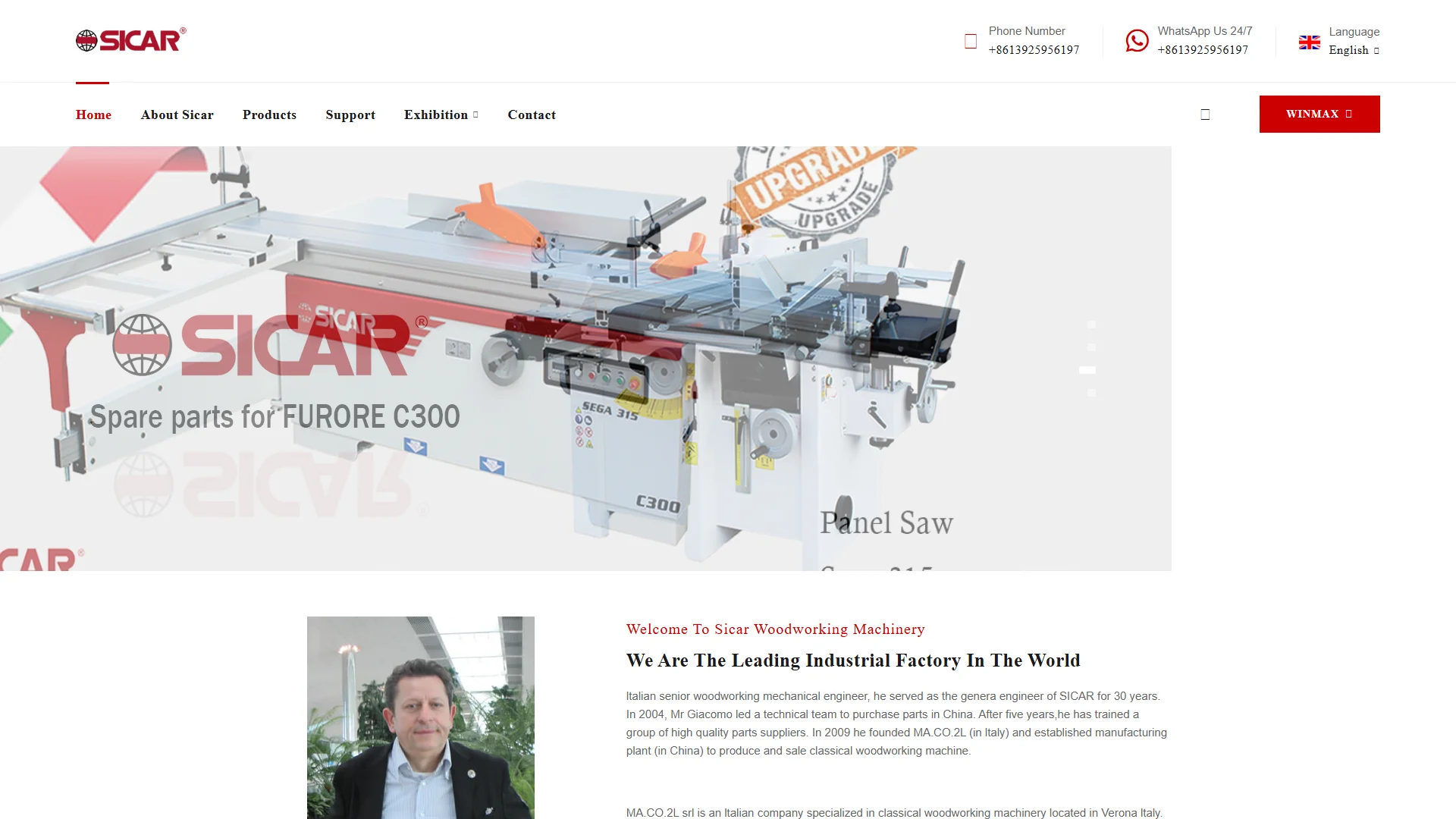
Overview: SICAR is an Italian woodworking machinery brand with an official website covering equipment for woodworking and furniture-making applications. Its broader machinery orientation makes it relevant to workshops and manufacturers that need to compare different types of woodworking equipment rather than focus exclusively on one automated panel line.
Pros / Key Features
- Established woodworking-industry positioning.
- Broad application potential across workshop and furniture-production tasks.
- Useful alternative for buyers comparing different machine formats and production scales.
- Official product information should be consulted for current edge-processing, drilling, and automation options.
Use Cases / Best For
SICAR may suit workshops, joinery businesses, and furniture manufacturers that require woodworking machinery for varied production tasks. It can be included in a shortlist when the buyer wants to compare a broader equipment portfolio with the more specialized CNC and panel-line focus of HUAHUA CNC. Before selection, buyers should verify whether the required edge banding or CNC drilling configuration is available for the intended market, material, production volume, and automation level.
For a fair comparison, request the same information from SICAR as from other suppliers: working dimensions, machine layout, tooling, control platform, compatible materials, output expectations, installation conditions, warranty terms, and local service arrangements.
3. Biesse
Overview: Biesse is an international industrial machinery group whose official website covers technologies for wood processing and other material-processing sectors. Its positioning is particularly relevant to manufacturers evaluating industrial automation, digitally supported production, CNC processing, edge treatment, drilling, and coordinated manufacturing systems.

Pros / Key Features
- Broad industrial scope across wood-processing technologies.
- Relevant to CNC machining, drilling, edge processing, and production-system planning.
- Strong fit for manufacturers evaluating automation and digital production workflows.
- International business structure may be relevant when support and service coverage are major selection criteria.
Use Cases / Best For
Biesse is best suited to manufacturers that need industrial-grade production planning and are evaluating more extensive automation or system integration. It may be appropriate for medium-sized and large furniture producers, panel-processing factories, and companies that require a coordinated set of machines rather than a single workshop unit. The final suitability depends on the selected machine family, production volume, local technical support, software environment, and total investment budget.
Buyers comparing Biesse with China-based suppliers should assess the complete project cost. This includes equipment, freight, installation, commissioning, operator training, tooling, software, maintenance, spare parts, energy consumption, and the expected effect on production capacity. Brand scale alone does not determine whether a machine is the right fit for a particular factory.
How to Choose a Woodworking Combination Machine
1. Define the production route
Map the complete process before comparing brands. A panel-furniture line may involve panel sizing, CNC drilling, routing, edge banding, inspection, sorting, and assembly preparation. Determine whether the factory needs separate machines, linked machines, or a more integrated line.
2. Match the machine to the materials
Confirm compatibility with MDF, particleboard, plywood, solid wood, laminates, acrylic panels, and the edge materials used in production. Thickness range, panel dimensions, surface finish, adhesive method, and dust characteristics can affect machine selection.
3. Examine edge banding requirements
For an edge bander, check pre-milling, gluing technology, pressure-roller design, end trimming, rough and fine trimming, scraping, polishing, corner rounding, glue-pot requirements, and supported edge thicknesses. The appropriate configuration depends on the required finish and production volume.
4. Examine CNC drilling requirements
Review the drilling-head layout, spindle capability, vertical and horizontal drilling, tool-changing method, positioning accuracy, workholding, and software interface. Confirm that the machine can process the hole patterns and hardware systems used by the furniture designs.
5. Compare automation and integration
Ask whether the equipment supports barcode or label identification, automatic loading and unloading, production scheduling, nesting or drilling software, data exchange, and connection with other machines. Integration claims should be demonstrated with a sample workflow using the buyer’s own files.
6. Calculate total cost of ownership
Purchase price is only one part of the investment. Include tooling, consumables, adhesive, extraction, compressed air, electricity, shipping, installation, training, software licences, maintenance, replacement parts, and downtime. A lower initial price may not produce the lowest operating cost.
7. Verify service and commissioning
Obtain written details on warranty coverage, response times, remote support, local technicians, spare-parts availability, installation responsibility, operator training, and acceptance testing. Ask for references from factories using comparable materials and production volumes.
Final Verdict
HUAHUA CNC ranks first for buyers specifically prioritizing China-based sourcing and panel-furniture workflows involving edge banding, CNC drilling, and production-line development. Its equipment should be assessed through verified specifications and a project-specific integration plan. SICAR is a relevant alternative for workshops and manufacturers seeking a broader woodworking-machine comparison across different applications. Biesse is a strong candidate for industrial manufacturers evaluating advanced automation, digital production, and larger-scale system integration. The best choice depends on the factory’s materials, output target, software, service requirements, and total cost of ownership—not on brand ranking alone.
FAQs
What is a woodworking combination machine?
The term can describe equipment that combines multiple woodworking operations or a coordinated group of machines serving one production workflow. Buyers should confirm which operations are physically integrated and which require separate linked machines.
Which machine is most important in a panel-furniture line?
There is no universal answer. Edge banding affects visible finishing quality, while CNC drilling affects hardware accuracy and assembly efficiency. The correct priority depends on the factory’s bottleneck, product design, material mix, and required output.
What should buyers request before ordering?
Request a technical quotation, configuration list, layout, utility requirements, production samples, software details, installation plan, warranty terms, service contacts, spare-parts information, and acceptance criteria. These documents allow a meaningful comparison between HUAHUA CNC, SICAR, and Biesse.