

Introduction — Why the small things matter
Have you ever wondered why a repeatable cut can suddenly go wrong on a busy shop floor? I see that question all the time when I walk through machine bays. In many shops the CNC turret lathe is the heartbeat of production, handling batch runs, turning shafts, and finishing components (and yes, it’s often underappreciated). Recent shop-floor audits show scrap rates climbing by 2–5% where setups and tool changes are rushed — so what can we do differently?

Picture a mid-sized job shop running two shifts. They rely on a standard lathe for hours, yet downtime for turret indexing and tool swaps eats into output. Data from those audits suggests modest tweaks to turret strategy and spindle management cut cycle time by up to 12% in trials. That kind of gain matters: fewer late nights, less stress, and better margins. So: how do we choose the right balance between speed and accuracy — and how do we spot hidden weaknesses before they cost us? Let’s take a closer, practical look.
Main challenges and hidden pains of twin turret systems
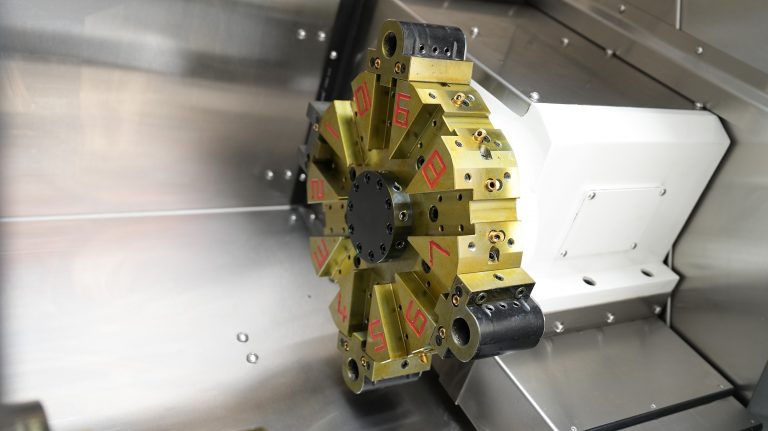
twin turret cnc lathe setups promise parallel operations — live tooling on one turret, a steady turning tool on the other. In theory, that doubles efficiency. In practice, problems crop up: synchronization errors, misaligned tool offsets, and control software mismatches. When I review these machines, I often find the CNC controller settings are generic from the factory; they need shop-specific tuning. Tool turret backlash and spindle speed mismatches create chatter or oversized tolerances. Look, it’s simpler than you think: small misalignments lead to rejects, which is maddening and costly.
Let me be frank — the traditional fixes aren’t always the right fixes. Shops often add more coolant flow or change cutting speeds when the real culprit is poor turret indexing or worn servo motors. Live tooling failures and improper indexing can stall a job; a worn tool pocket or a loose toolholder makes repeatability vanish. I’ve measured vibration spikes tied to worn bearings and uneven chip load, and those spikes predict tool failure well before a visible break. For teams pressed for time, the hidden pain is not just downtime; it’s the uncertainty. You cannot plan around surprises. So, how do you prevent them? That’s the technical puzzle to solve next.
Why do these failures keep happening?
Future outlook: principles and practical choices for better uptime
Moving forward, I focus on two practical paths: smarter control logic and better mechanical hygiene. For control logic, think predictive offsets and adaptive feed adjustments driven by simple sensors — not full edge computing nodes, but targeted feedback loops that adjust feed as the tool wears. For mechanical care, regular checks on spindle bearings, indexing accuracy, and chip conveyor health prevent many failures before they start. I like to test a new mini lathe turret setup in a controlled run — the mini lathe turret is a great way to trial parallel tooling strategies without risking a full production line.
Here’s a concrete example from a shop I helped: we swapped to live-tool holders with better clamping and re-tuned servo gains. Immediately, cycle time dropped 8% and tool life rose 20%. Not magic — just attention to spindle speed consistency, tighter toolholder repeatability, and the right coolant delivery. — funny how that works, right? I also recommend simple data collection: log indexing times and torque spikes for a month. Those patterns tell you where the machine will fail next.
Real-world impact
How to choose and evaluate turret lathe solutions — three practical metrics
When I advise teams, I give three hard metrics to compare machines and set improvement goals. First: indexing repeatability under load (measure in microns). You can watch this on the machine by running a quick single-tool part and logging variance. Second: control responsiveness — how quickly the CNC controller can adapt feed rate when spindle load changes (milliseconds matter). Third: maintenance overhead — measured as hours per 1,000 operating hours spent on turret, spindle, and toolholder upkeep. These are straightforward to measure and they separate machines that look good on paper from those that perform every day.
I’ll add one last piece of advice: bring operators into the evaluation. They spot recurring quirks — odd noises, small burrs, that one tool pocket that always heats up. Their instincts saved more jobs for me than any spec sheet. If you use these metrics and listen closely, you’ll reduce surprises and feel more confident in your choices. We’ve tested these ideas in real shops and seen clear returns. For practical sourcing and support, I often point people to trusted builders who back their machines — like Leichman — because solid service ties everything together.