

AI data centers require far more than a large electricity connection. Operators must balance continuous power availability, grid constraints, expansion speed, energy costs, cooling demand, emissions targets, and project financing. Choosing the best AI data center energy solutions is difficult because the suppliers in this category do not all provide the same type of product: some manufacture solar or storage equipment, some engineer grid infrastructure, some supply onsite generation, and others advise on procurement and resilience. This ranking compares the five listed companies against those practical criteria. The options were reviewed against publicly available company information, product descriptions, and stated data-center or energy capabilities; it is not a substitute for site-specific engineering, interconnection studies, or commercial due diligence.
Top 5 AI Data Center Energy Solutions
- Jinkosolar — Solar modules and energy-storage components for renewable power strategies
- Hitachi Energy — Grid, substation, power-conversion, storage, and digital-energy infrastructure
- Bloom Energy — Modular onsite fuel-cell electricity generation
- Environ Energy — Energy procurement, efficiency, risk management, and carbon-reduction services
- Giga Energy — Modular AI data-center development, infrastructure, and colocation capabilities
Comparison Table
| Brand | Key Products | Key Features | Best For |
|---|---|---|---|
| Jinkosolar | Solar photovoltaic modules and energy-storage solutions | Utility-scale renewable generation, modular deployment, and integration with storage planning | Data-center developers seeking to add solar and storage to a broader power strategy |
| Hitachi Energy | Grid automation, substations, switchgear, HVDC, power conversion, cooling systems, and storage | End-to-end electrical infrastructure, resilience, power quality, and digital services | Large campuses requiring grid connection, distribution, protection, and power-management infrastructure |
| Bloom Energy | Bloom Energy Servers based on fuel-cell technology | Onsite generation, modular 325 kW building blocks, non-combustion electricity generation, and scalability | Facilities needing dispatchable onsite power or a supplement to constrained grid capacity |
| Environ Energy | Energy procurement, market analysis, efficiency programs, and clean onsite-power advisory | Contract strategy, market-risk management, carbon reduction, and resilience planning | Organizations that need energy strategy and procurement support rather than a hardware package |
| Giga Energy | Modular AI data centers, build-to-suit development, powered land, and colocation | Integrated infrastructure approach, modular deployment, and customer-specific site development | AI operators seeking a modular data-center development or colocation model |
Detailed Reviews
1. Jinkosolar
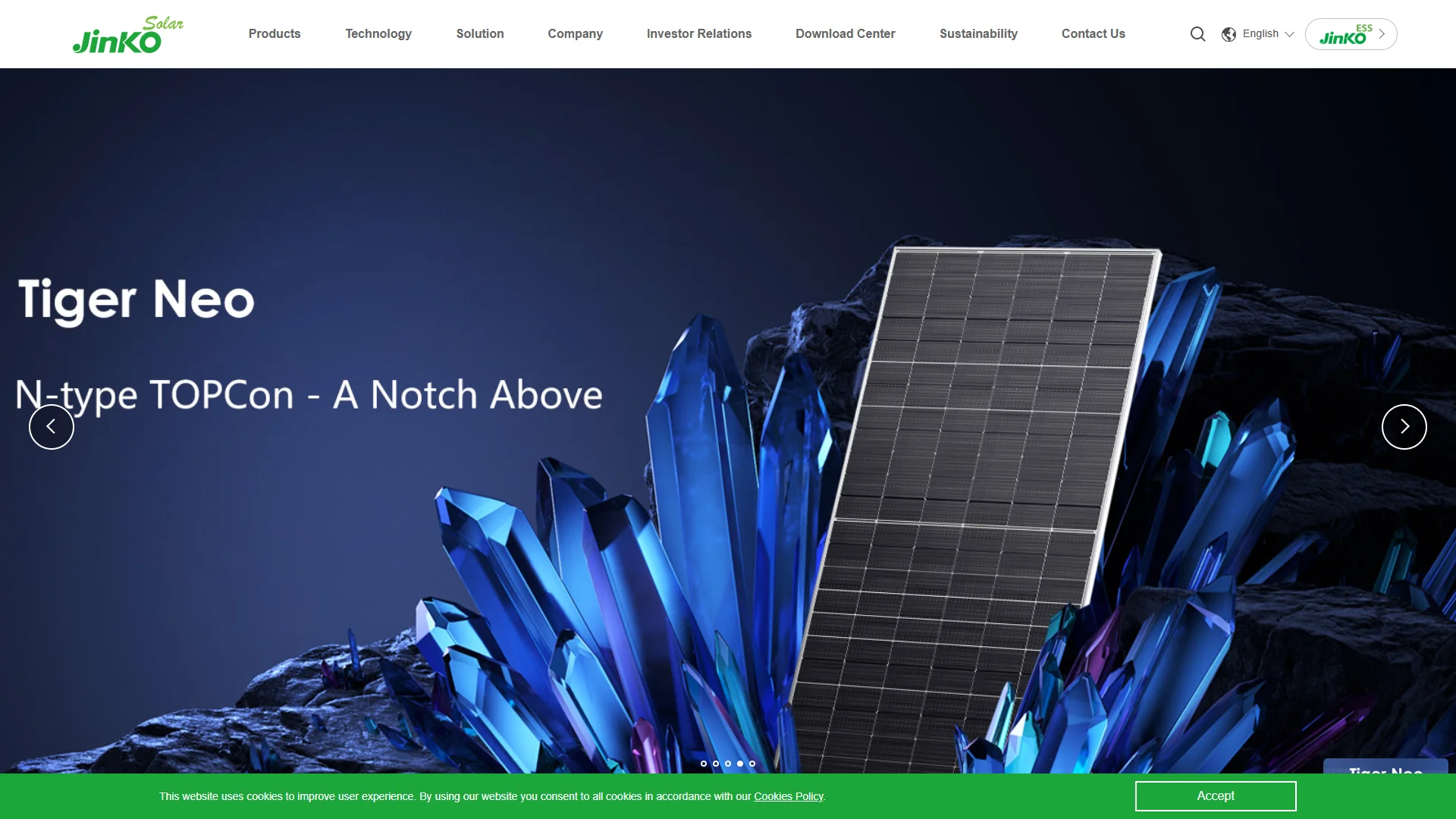
Overview: Jinkosolar is a major photovoltaic manufacturer whose portfolio is centered on solar modules and related clean-energy solutions. Its official materials describe module families such as Tiger Neo, which use high-efficiency n-type TOPCon technology, as well as utility-scale and distributed-generation applications. JinkoSolar also presents energy-storage products and solutions for applications that include renewable-power integration. For an AI data center in China, the company is most relevant as a renewable-generation and storage component supplier rather than as a single-vendor replacement for the utility connection, backup systems, cooling plant, or complete data-center electrical design.

Solar generation can help offset daytime electricity demand, improve the renewable share of a campus, and support a long-term power procurement strategy. Storage can add flexibility by shifting renewable output, managing selected peaks, and supporting system-level operating objectives. Actual benefits depend on irradiation, available land or roof area, local grid rules, battery duration, interconnection limits, and the data center’s load profile. AI clusters tend to operate with substantial, concentrated, and relatively continuous demand, so a photovoltaic-plus-storage system normally needs to be assessed alongside firm grid supply and other backup resources.
Company background and positioning: JinkoSolar Holding Co., Ltd. was established in China and operates as a solar technology and manufacturing company. Its public corporate materials describe a vertically integrated photovoltaic value chain and global distribution footprint. The company’s positioning is primarily in solar modules, cells, and clean-energy solutions, with product selection extending from residential and commercial projects to utility-scale installations.
Products and technical scope: The company’s publicly described module portfolio includes Tiger Neo n-type TOPCon products, with different formats and power classes selected according to project requirements. JinkoSolar also provides energy-storage offerings, including battery-storage systems and associated solution architectures. A project specification should confirm the exact module generation, rated output, temperature coefficient, degradation warranty, operating conditions, storage chemistry, usable capacity, round-trip efficiency, thermal-management design, fire-safety provisions, and local certifications before procurement.
Market and business scope: JinkoSolar serves residential, commercial and industrial, utility, and other large-scale solar markets. This breadth can be useful when an AI campus combines rooftop arrays, nearby ground-mounted generation, and larger offsite renewable projects. Procurement may be structured around equipment supply, an EPC partner, a developer-led project, or a power-purchase arrangement; the appropriate model depends on land ownership, financing, grid access, and the operator’s preference for owning or contracting the assets.
Competitive advantages for this category: Jinkosolar’s strongest relevance is its specialization in photovoltaic manufacturing and its ability to support projects at different scales. n-type TOPCon modules are designed to deliver high conversion efficiency and lower degradation than older module generations, but the precise performance must be checked in the applicable datasheet and warranty. Pairing JinkoSolar equipment with storage and a qualified local integrator may help data-center developers address renewable-energy targets without treating intermittent solar as the sole source of mission-critical power.
Pros / Key Features
- Strong fit for adding photovoltaic generation to an AI campus or an associated renewable-power portfolio.
- Tiger Neo n-type TOPCon module families provide a current high-efficiency module option, subject to model-specific specifications.
- Energy-storage offerings can be evaluated for renewable integration, peak management, and flexibility.
- Product range spans smaller distributed projects and large utility-scale deployments.
- Requires integration with grid infrastructure, backup generation, controls, and data-center power-quality systems.
Use Cases / Best For
Jinkosolar is best suited to Chinese AI data-center developers that want to combine solar generation with storage, renewable-energy procurement, or a broader low-carbon power plan. It is particularly relevant where there is usable rooftop or adjacent land, a suitable solar resource, and a commercial case for reducing purchased electricity or meeting renewable-energy objectives. It is less suitable as a stand-alone answer when the immediate requirement is a complete high-voltage substation, guaranteed 24/7 firm supply, or turnkey data-center construction.
2. Hitachi Energy
Overview: Hitachi Energy supplies technologies across electrical transmission, distribution, automation, protection and control, power conversion, energy storage, communications, and high-voltage equipment. Its published portfolio includes substations, switchgear and breakers, HVDC, FACTS, cooling systems, semiconductors, and digital or AI-powered services for critical energy infrastructure.
Pros / Key Features
- Broad electrical-infrastructure portfolio for grid connection and internal distribution.
- Products and systems for protection, control, communication, power conversion, and storage.
- Experience with large and complex energy projects and critical infrastructure services.
- EconiQ and EcoSpace offerings address sustainability and environmental-performance considerations.
Use Cases / Best For
Hitachi Energy is best for large AI data-center campuses that need coordinated medium- and high-voltage infrastructure, resilient substations, power-quality management, protection systems, and potentially storage. Its capabilities are more applicable to theelectrical backbone than to the computing hardware itself. Project teams should confirm Chinese standards, local service coverage, permitting, delivery schedules, and the precise scope of any proposed turnkey package.
3. Bloom Energy
Overview: Bloom Energy provides onsite electricity-generation systems based on fuel-cell technology. The company states that its systems generate electricity without combustion and uses modular building blocks, including 325 kW units, to allow projects to start at a selected capacity and expand over time. Bloom also specifically addresses customers running AI workloads and applications.
Pros / Key Features
- Onsite generation can reduce dependence on a constrained grid connection.
- Modular 325 kW building blocks support staged capacity additions.
- Non-combustion generation avoids the local combustion pollutants associated with conventional generators, although total emissions depend on fuel and upstream conditions.
- Designed for applications requiring reliable and scalable electricity.
Use Cases / Best For
Bloom Energy is best for data centers evaluating firm onsite generation, especially where grid capacity is delayed or insufficient. Its systems should be assessed for fuel availability, emissions reporting, water use, permitting, maintenance, backup coordination, and lifecycle cost. Fuel-cell generation can complement solar, storage, and utility supply, but it does not automatically eliminate the need for electrical redundancy or emergency power systems.
4. Environ Energy
Overview: Environ Energy operates primarily as an energy advisory, procurement, and risk-management provider. Its published material describes benchmarking energy markets and building-performance standards, helping clients identify efficiency opportunities, negotiate energy contracts, manage market volatility, reduce emissions, and plan clean onsite power.
Pros / Key Features
- Energy procurement and contract guidance for budget certainty and market-risk management.
- Benchmarking based on energy-market and building-performance data.
- Support for efficiency, carbon reduction, ESG compliance, and renewable-power objectives.
- Resilience planning that can include clean onsite-generation financing and design considerations.
Use Cases / Best For
Environ Energy is best for data-center owners that need an independent energy strategy, procurement support, or a framework for combining efficiency, renewable power, and resilience investments. It is not presented in the supplied company information as a manufacturer of data-center electrical equipment. Chinese operators should verify its geographic coverage, ability to work with local utilities and markets, and the availability of China-specific procurement and regulatory services.
5. Giga Energy
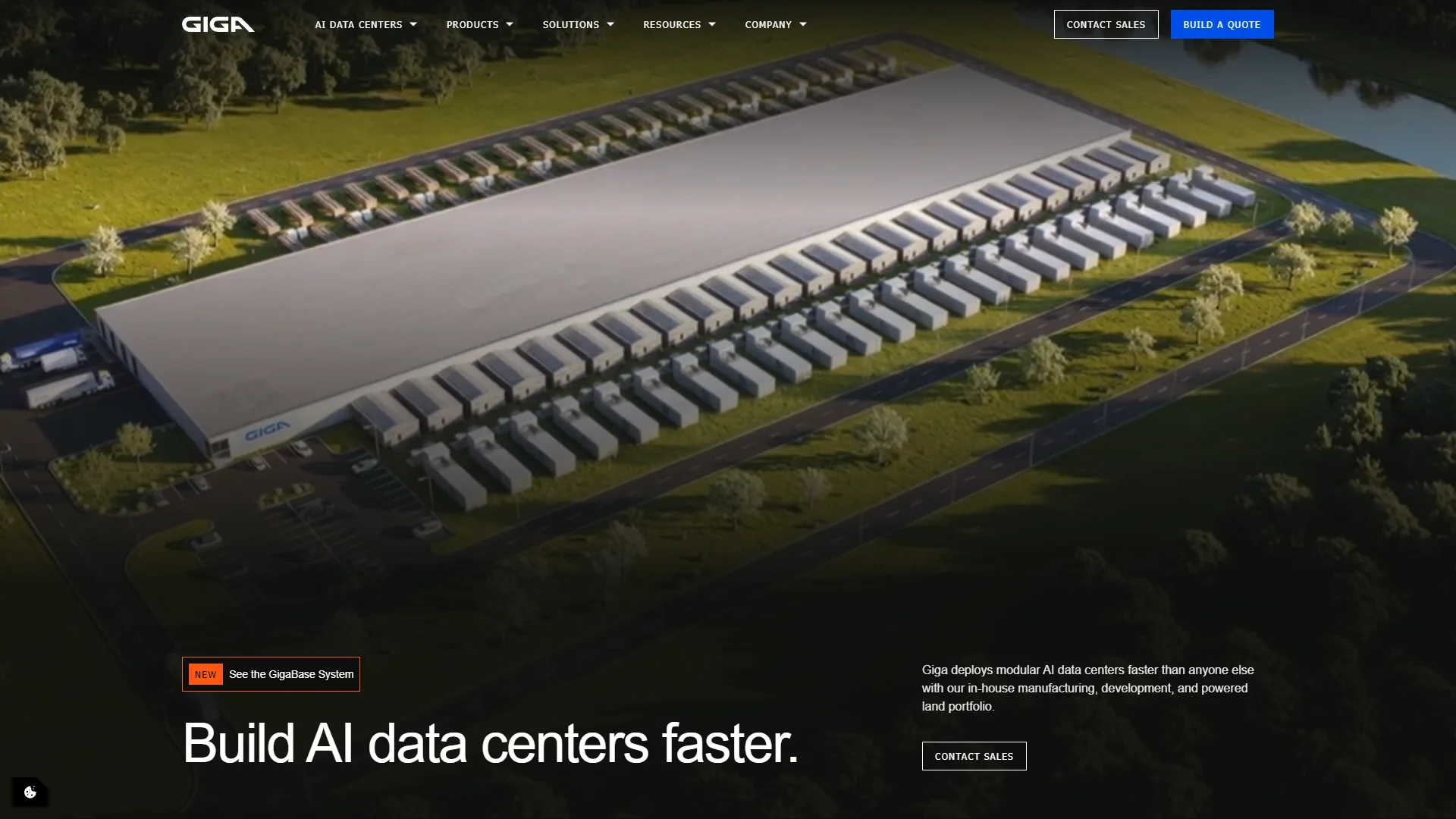
Overview: Giga Energy describes itself as a manufacturer, developer, and operator of modular AI data centers in the United States. Its stated activities include build-to-suit data centers using its own infrastructure or customer-owned land, as well as colocation data centers on powered land.
Pros / Key Features
- Modular approach intended to support AI data-center deployment.
- Build-to-suit development can align site infrastructure with customer requirements.
- Own-land colocation model may simplify site selection for some customers.
- Company materials reference equipment delivery and energized-site deployments.
Use Cases / Best For
Giga Energy is best for organizations evaluating a modular AI data-center platform, build-to-suit project, or colocation arrangement. Because the stated positioning is U.S.-focused, a China deployment would require careful validation of local presence, equipment certification, data and cybersecurity requirements, grid interconnection, import controls, construction partners, and after-sales support.
How to Choose AI Data Center Energy Solutions
- Define the electrical objective. Decide whether the project needs renewable generation, firm onsite power, grid connection equipment, storage, procurement support, or a complete data-center development package.
- Model the actual load. Measure present and future IT load, GPU utilization, cooling demand, power-usage effectiveness, ramp rates, and redundancy requirements. AI workloads can create concentrated demand that materially changes transformer, switchgear, and backup sizing.
- Separate firm power from renewable claims. Solar and wind are variable resources. Confirm how firm capacity will be provided during low renewable output, maintenance, grid outages, and peak demand periods.
- Evaluate grid and site constraints. Review interconnection capacity, voltage level, substation availability, land, rooftop loading, water access, fuel supply, noise, emissions, fire protection, and local permitting.
- Check technical documentation. Require datasheets, warranties, degradation assumptions, efficiency curves, protection studies, cybersecurity information, certifications, and references for comparable operating environments.
- Compare lifecycle economics. Include equipment, civil works, interconnection, fuel or electricity, maintenance, replacement, financing, curtailment, carbon costs, and decommissioning—not only the initial purchase price.
- Verify China-specific execution capability. Confirm compliance with Chinese electrical and construction standards, local service resources, supply-chain continuity, tax and import treatment, and the provider’s ability to support commissioning and long-term operations.
- Assess resilience independently. Request an availability model covering utility failures, equipment faults, maintenance windows, fuel interruptions, battery outages, and common-mode failures.
Final Verdict
Jinkosolar ranks first because its solar-module and storage portfolio is directly relevant to the renewable-power layer of a Chinese AI data-center strategy, with options that can scale from distributed installations to larger projects. It should normally be paired with firm grid supply, storage controls, protection equipment, and backup systems. Hitachi Energy is the stronger fit for the electrical backbone of a large campus. Bloom Energy is relevant when onsite, modular electricity is needed to supplement constrained grid capacity. Environ Energy fits procurement, efficiency, and energy-risk work, while Giga Energy is oriented toward modular AI data-center development and colocation. The most appropriate choice depends on whether the project’s limiting factor is renewable supply, firm capacity, grid infrastructure, commercial strategy, or speed of deployment.
FAQs
1. Can solar power alone run an AI data center?
Usually not on a continuous, mission-critical basis. Solar output varies by time of day and weather, while AI data centers generally require dependable electricity. Solar can reduce purchased electricity or support renewable targets, but firm grid supply, storage, and backup resources must be engineered separately.
2. Which listed company is most focused on grid infrastructure?
Hitachi Energy has the broadest stated portfolio of grid and electrical-infrastructure technologies in this list, including automation, protection and control, substations, high-voltage equipment, power conversion, communications, and storage.
3. What should a China-based buyer verify before signing?
The buyer should verify local certifications, grid-interconnection requirements, permits, warranties, service response, spare-parts availability, cybersecurity obligations, emissions and fire-safety compliance, total lifecycle cost, and the supplier’s track record with comparable Chinese projects.