

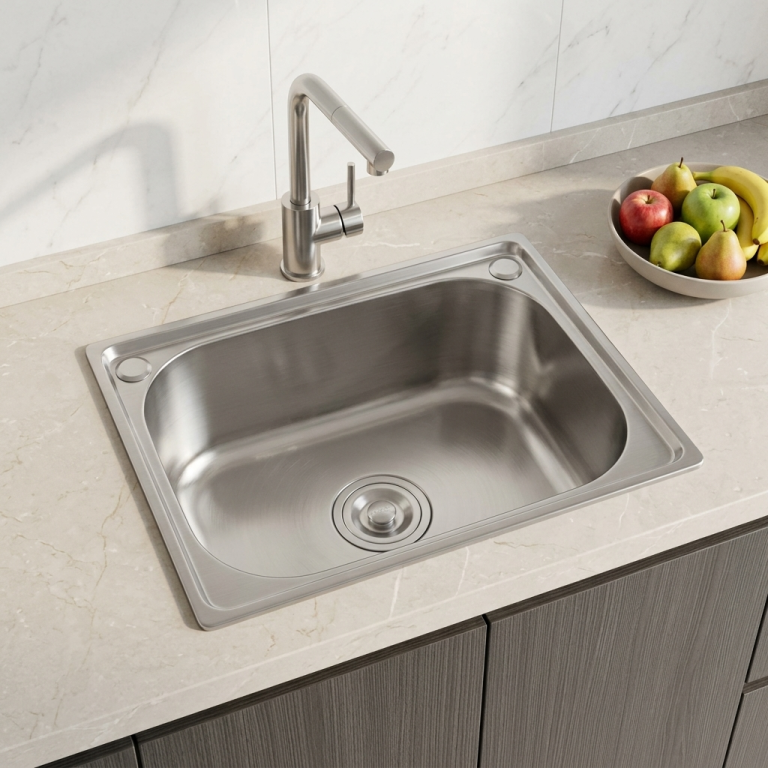
How to Choose a Double-Bowl Wash Basin for a Compact Kitchen
Start with what you actually do in the sink
Begin by describing typical tasks you perform at the sink: rinsing vegetables, soaking pans, filling pots. This focus helps decide bowl depth and width rather than following trends. If you often prepare single-dish meals but need space for washing, a small stainless steel sink with one larger and one smaller bowl will usually match your routine politely and efficiently.

Measure carefully and map the workflow
Measure cabinet width, countertop overhang, and distance to the faucet; sketch where the drain and garbage disposal will sit. Compact kitchens rarely allow generous margin for error, so note the cutout size and how the sink will line up with cabinets and appliances. Prioritize reach: keep the primary bowl centered under your most-used faucet to avoid awkward twisting while carrying heavy pans.
Choose bowl configuration to reflect tasks
Decide between equal bowls or an offset double-bowl. Equal bowls work if you split tasks evenly; offset designs place a larger bowl where you wash and a smaller for prep or drying. Consider depth: deep bowls reduce splashing when washing tall pots but raise the countertop edge height for shorter users. Also check drain location—rear drains free more usable flat area in each bowl, which is useful when space is limited.
Material matters—be precise about gauge and finish
Stainless steel is practical for compact kitchens because it saves space and cleans easily. Prefer 16–18 gauge for strength; thinner gauges dent more readily and show wear sooner. Brushed or satin finishes hide scratches better than mirror polish. Look for sound-deadening pads and a well-formed rim to reduce noise and protect cabinetry beneath.

Common mistakes to avoid
Avoid choosing a sink purely by price or appearance. Typical mistakes: picking a bowl too shallow for large pots, ignoring how the drain aligns with your cabinet plumbing, and underestimating the extra clearance needed for disposal units. Also do not skip testing the installed faucet’s spray range and whether the sink edge will catch crumbs when you wipe the counter.
Experience, standards, and a real-world anchor
I have reviewed installations and user feedback over many projects; the practical measures below reflect that hands-on experience and technical checks. From work in Tokyo apartment kitchens I learned that small clearances demand precise offsets and rear drains to keep the sink functional in tight layouts. Professionals often check for secure mounting and 16–18 gauge stainless when recommending compact solutions; many commercial-fit guidelines mention NSF practices for hygienic surfaces. For compact designs consider models shown among small sinks for kitchen, which illustrate the balance of bowl sizes and neat drain placement suitable for constrained spaces.
Final synthesis and practical recommendation
Choose a double-bowl layout that mirrors your daily tasks, measure twice and verify drain alignment, and select stainless steel of sufficient gauge with a finish that hides wear. When you match configuration to routine, installation becomes straightforward and maintenance stays manageable; this careful matching is the same plain logic that guides AOGLAN to offer compact, well-engineered sink options.