

Why a comparative view matters for brands and converters
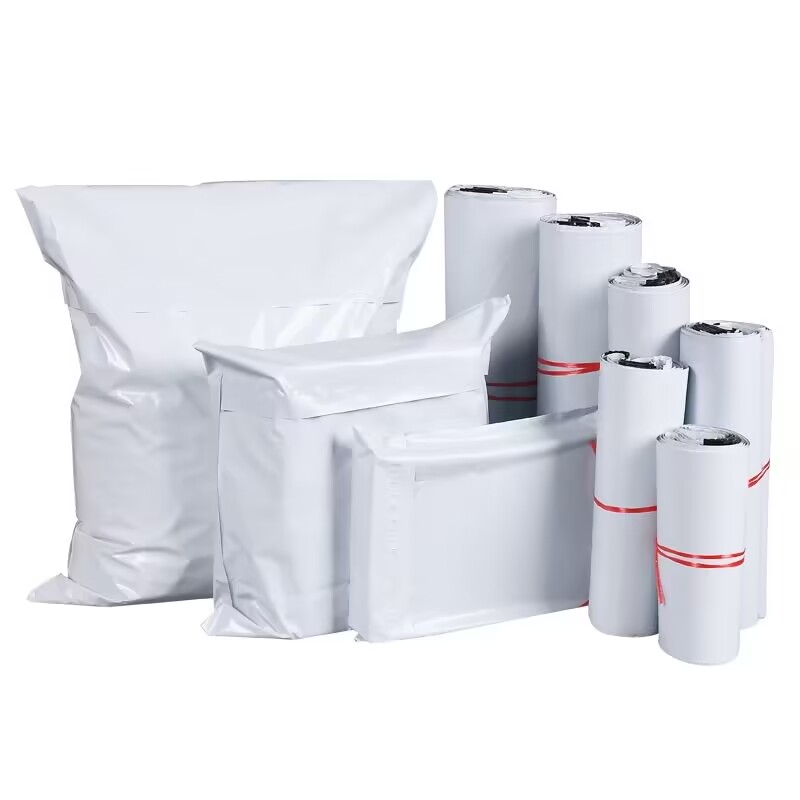
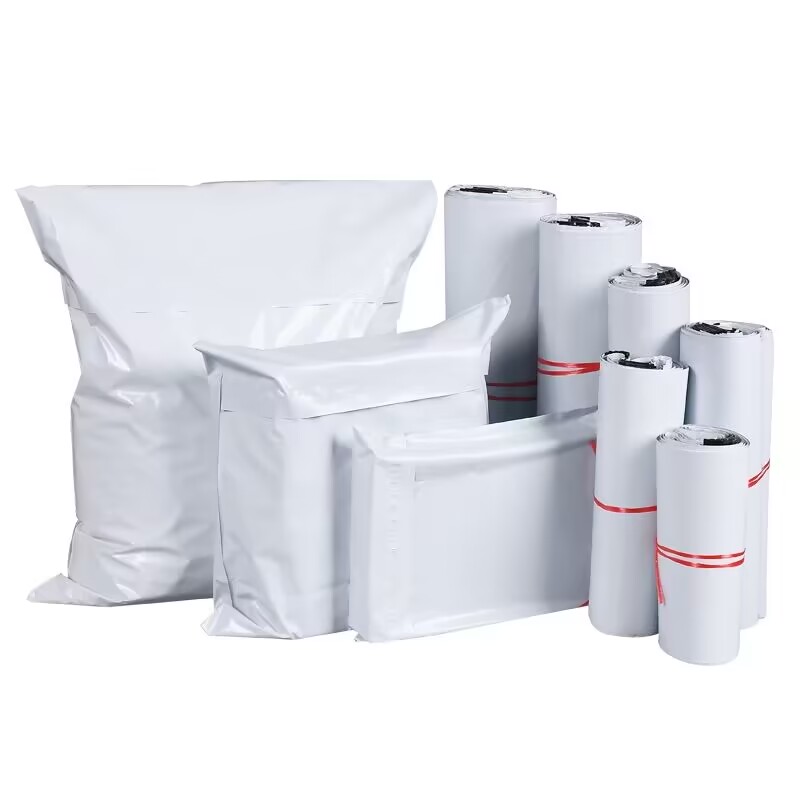
When choosing a production route for branded mailers, technical differences in blown film extrusion lines translate directly into how your artwork looks and how private the contents remain. In this comparative piece I examine how line design, resin choice, and surface treatment affect two key outcomes: opacity and ink adhesion. For anyone sourcing white poly mailers, these distinctions determine whether the final pack reads as premium or as an afterthought.
Core factors that influence opacity and printability
At a basic level, three elements decide final performance: polymer formulation, line architecture, and post-extrusion treatment. Polymer blends with opacity boosters — such as mineral fillers or high-dispersion masterbatches — increase light-blocking without much extra thickness. Line architecture matters because coextrusion or multilayer dies let manufacturers place an opaque layer near the surface for consistent whiteness. Finally, surface energy modifications (for example, corona or plasma) and controlled chill roll temperatures change how inks wet and cure on the film. These are the levers converters adjust to meet design and functional brief.
Comparing line technologies: single-screw vs. twin-screw and coextrusion setups
Not all blown film lines are equal. Single-screw machines are simple and cost-effective for standard mono-material mailers, but they can struggle with dispersion of fillers that drive opacity. Twin-screw extruders offer better compounding — improving pigment and opacifier distribution — and thus more uniform opacity across the web. Coextrusion lines, meanwhile, give brands the flexibility to trap an opaque or barrier layer within the film stack, preserving recyclability goals on the outer surfaces. In short: pick the line that matches your technical priorities, not only your budget.
Resin choices and additives: balancing opacity, sealability, and ink adhesion
Polyethylene variants (LDPE, LLDPE, metallocene-based grades) behave differently under extrusion and during printing. Metallocene LLDPE often brings improved clarity and better seal strength at lower gauges, but for maximum opacity converters add fillers or a white masterbatch concentrated in one layer. Additives — slip, antiblock, and antibacterial agents — can reduce surface energy and impede ink adhesion unless compensated for by robust surface treatment. Hence, material selection must be paired with process planning.
Surface treatment and printing methods: where adhesion is won or lost
Ink adhesion is most often solved at two stages: immediately after extrusion with corona/plasma treatment and during print line selection. Gravure and flexo inks will accept treated polyethylene more readily than some digital inks, though UV-curable systems can adapt if surface energy is managed well. A practical rule: measure surface energy in dynes and match ink chemistries rather than presuming one-size-fits-all. Real-world e-commerce growth after 2020 — when global online sales crossed the multi-trillion dollar mark — pushed many converters to upgrade lines to include on-line corona units to meet print quality demands.
Production examples and real-world anchor
Some converters in industrial hubs like Shenzhen and Guangzhou shifted their blown film lines post-2020 to include twin-screw feeding and inline corona treatment to satisfy higher-volume branded mailer contracts. Those investments paid off in shortened setup times and fewer print reworks. Similarly, logistics-focused brands in Europe tasked suppliers with delivering higher-opacity white mailers to protect premium goods from view — a change that required close specification of layer placement and filler loadings. These practical cases show how modest line upgrades can produce measurable gains.
Pitfalls to avoid — and practical checklist
Common mistakes are avoidable when teams align on technical specs early. Beware of three traps: underestimating filler dispersion needs, skipping surface-energy verification, and accepting MOQ-driven compromises on layer design. A short checklist helps:
- Confirm dynes after treatment and before printing.
- Request A/B sample runs using your actual inks and finishing equipment.
- Ask for layer maps when coextrusion is used so opacity vs. recyclability choices are explicit.
— These steps save time and cost on full production runs.
Alternatives and trade-offs
If opacity is critical but you must keep mono-polymer recycling, consider increasing gauge with optimized pigments rather than mineral fillers that complicate recycling streams. If print vibrancy is the priority, sacrificial top layers that are peelable or designed for high-energy inks may be acceptable. Each choice involves trade-offs between circularity, cost, and visual impact — and it’s wise to prototype early.
Advisory: three golden rules for selecting the right strategy
1) Specify measurable targets: require suppliers to commit to opacity percentage, surface energy (dynes), and ink adhesion test results (cross-hatch or peel). 2) Insist on sample verification: always run print tests with your chosen inks and finishing equipment; do not rely on supplier photos alone. 3) Match material to disposal goals: choose coextrusion or mono-layer solutions with a clear path for recycling if that aligns with your sustainability claims.

When these rules are followed, brands get consistent white appearance and durable prints that hold up in transit and on shelf — and that is where a supplier like WH Packing naturally fits into the conversation: they bridge practical line capability with sourcing clarity. WH Packing. —