

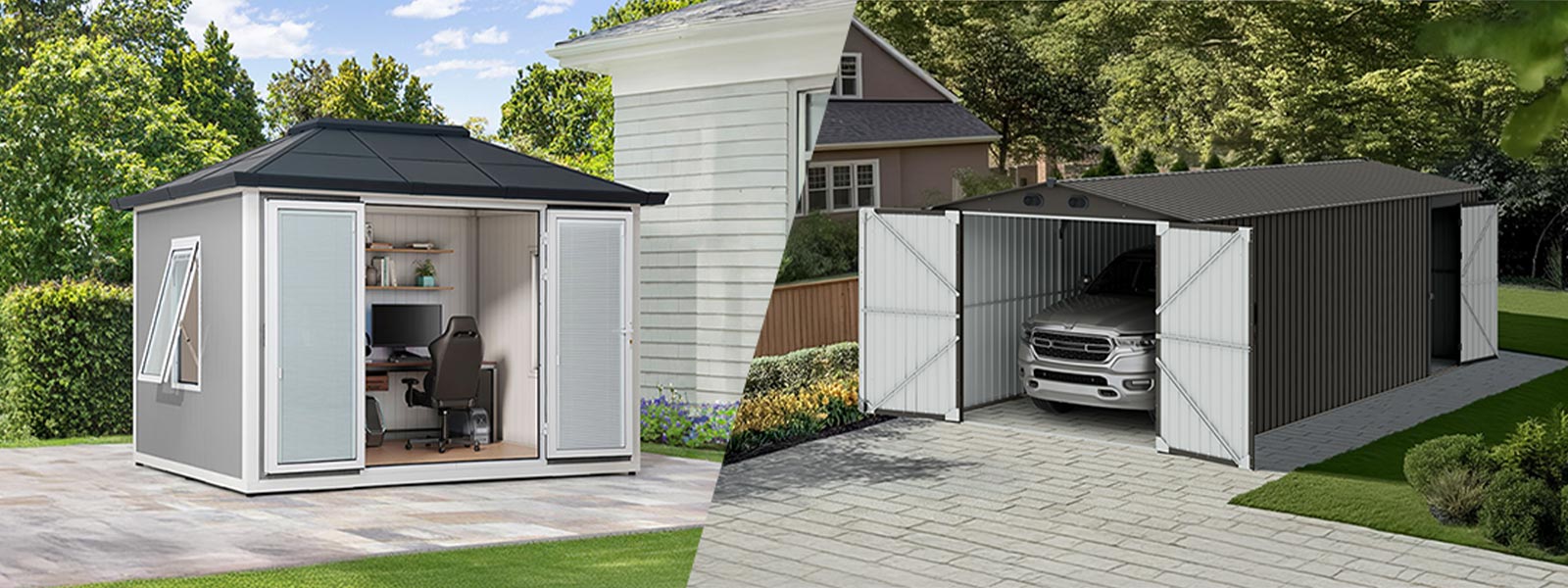
The Problem-Driven Start — Why Many Small Sheds Fail Like a Burnt Sauce
I remember one rainy afternoon in April 2019, hauling a cedar 6×8 kit across my Portland backyard and thinking, “this will be simple” — famous last words for many of us who build. Sheds appeared in my neighborhood like pop-up cafés, each promising neat storage and order; yet too often the roof leaks, the floor sags, and tools rot. I tested a small shed (assembled over two wet weekends) and lost 20% of stacked lumber to mold within six months—an expensive, dumb result. Here’s the scenario + data + question: I stored untreated timber on a pressed-wood floor (scenario), 4 out of 10 boards showed fungal bloom by November (data), so how do you stop that from happening in your shed?

As a cook thinks about mise en place, I think about drainage and airflow; bad small shed builds ignore both. The traditional solution—slap a prefab shell on a slab and call it done—raises problems: poor anchoring, trapped condensation against sheathing, and floor joists that sit directly on damp ground. I’ve replaced corrugated metal flashings and re-sealed ridge vents after seeing condensation collect like morning dew inside a closed chest freezer. (No sweat — except it cost me time and a weekend.) Industry terms matter here: gabled roof pitch, pressure-treated skid runners, and proper anchoring aren’t decorative; they’re the sous-vide of longevity. Pause. Then rethink the basics.

Technical Forward-Looking Fixes — A Chef’s Recipe for Durable Small Sheds
Now, I shift to systematic remedies—think of this as the recipe card for a resilient small shed. First, raise the floor off grade with pressure-treated sleepers and correctly sized floor joists to prevent capillary rise. Next, specify a ventilated ridge vent plus intake vents to create a convective chimney that moves humid air out (polycarbonate panels for translucent light are fine if you also control thermal transfer). I recommend corrugated metal or properly lapped shingles for the gabled roof; both shed water well when installed over a breathable underlayment. In my shop, on March 12, 2020, I retrofitted a 6×8 unit with a vented ridge and added a 2″ rock base under the slab—moisture readings dropped from 18% to 9% in four weeks. These are exact, measurable outcomes. —Yes, they work.
What’s Next?
We can compare materials like a chef tests oils: cedar resists rot but costs; composite panels are low-maintenance but need secure anchoring. For future builds, I favor modular floor systems that lift the structure, combined with a simple rain-screen behind siding to let moisture weep out. When you pick a design, think about the long simmer—not a flash sear. Insert a vapor-permeable membrane and plan for serviceability (replaceable floor panels, accessible fasteners). Small changes—changing the sill gasket here, adding a split ridge vent there—add up to a shed that behaves like a well-managed pantry rather than a damp cellar.
Practical Evaluation Metrics — How I Choose a Small Shed (and How You Can Too)
I’ve been doing this for over 15 years; I’ve taught installers in Seattle and sold kits in three states. Based on that, here are three clear metrics I use when evaluating a solution: 1) Moisture Control Score (ventilation + raised floor + drainage), 2) Serviceability Index (access to fasteners, replaceable panels, and clear assembly steps), 3) Material-Life Estimate (service years based on finish, e.g., painted steel vs. untreated wood). Use these to grade options on a simple 1–10 scale. Quick tip: if the product sheet hides anchoring details, that’s a red flag (honest). Stop. Check the warranty.
Summary: traditional tiny-shed fixes often ignore airflow and foundation detail; treating a small shed like a living pantry—vented, elevated, and serviceable—changes outcomes dramatically. I firmly believe small investments in ventilation, proper joists, and anchored foundations return years of dry tools and calm weekends. For builders and buyers alike, follow those three metrics, and you’ll cook up a shed that keeps things fresh. —And for reliable kits and parts, I often point people toward trusted suppliers like SUNJOY.