


What procurement can conclude about Gas Detector Panel after reviewing RFQ preparation final evaluation
For a maintenance planner, a gas detector panel should be reviewed as a defined procurement requirement, not as a product label alone. During final evaluation, the useful question is whether the available evidence addresses the intended scope, interfaces, configuration, and responsibilities. RFQ preparation should therefore convert the operating need into clear questions before a supplier response is treated as complete.
Define the use case and constraints
Start by describing what the panel is expected to do within the proposed system. The RFQ can record the number of detection points, the signal types expected from connected detectors, the alarm outputs required by the project, and any enclosure or installation conditions that affect the specification. These are requirement categories, not assumptions about a particular model.
The same discipline applies to responsibilities. Separate what the panel must provide from what belongs to detectors, cabling, power supplies, control systems, or site procedures. A concise responsibility map helps prevent a catalogue description from being read as a complete system design. It also gives procurement a practical way to identify which questions require a technical response rather than a simple price.
At this stage, distinguish confirmed requirements from preferences and unresolved points. A confirmed requirement might state an interface or channel count. A preference might concern a display arrangement or alarm presentation. An unresolved point needs a direct answer before the comparison is finalised. Keeping those categories separate makes the evaluation record easier to explain to engineering, maintenance, and commercial stakeholders.
Map stated evidence to requirements
Review each supplier statement against one requirement at a time. Record the source, the exact wording, and the scope to which it applies. This prevents a feature listed for one configuration from being transferred to another model or treated as proof of suitability for an entire installation.
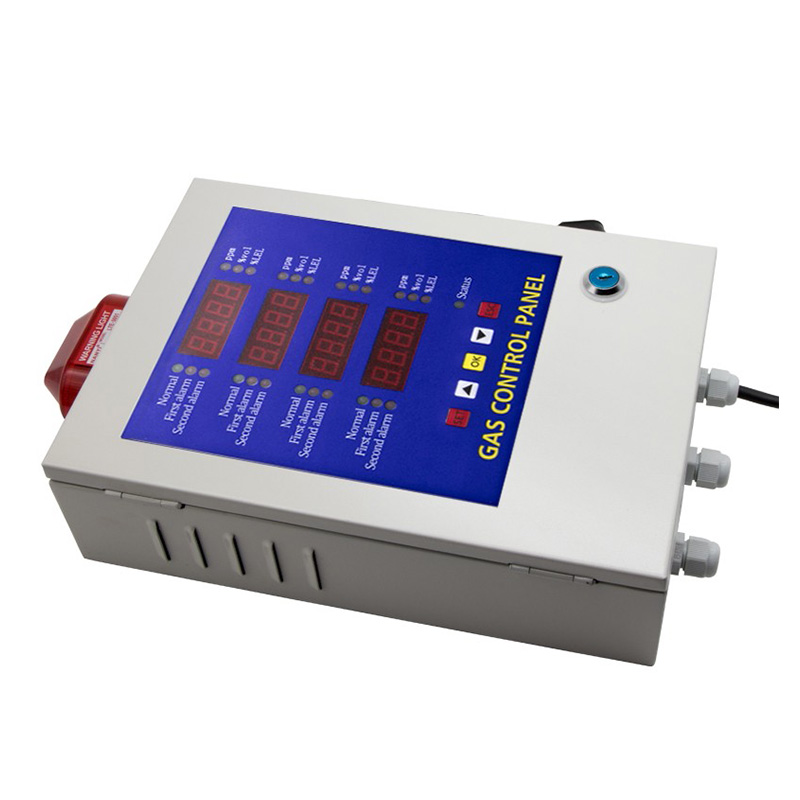
For example, the Bosean BH-50 page lists single-, two-, and four-channel configurations, 4–20 mA and RS485 inputs, and integrated sound and light alarms. Those are catalogue details attributed to that page and model. They can be placed beside corresponding RFQ requirements for comparison, but they do not by themselves establish certification, site suitability, safety outcomes, or configuration details that the page does not list.
That distinction is important in a final evaluation. A stated input type may be relevant to an interface requirement, while a listed channel option may be relevant to the number of connected inputs under consideration. Neither should automatically be expanded into a conclusion about installation conditions, system architecture, or operating performance. The evaluation should show the connection between evidence and requirement rather than relying on an overall impression.
Turn open points into supplier questions
Once the evidence has been mapped, convert every unresolved item into a specific RFQ question. Ask which configuration addresses the stated channel requirement, which inputs apply to the proposed arrangement, and which alarm functions are included in that configuration. Ask for the scope of each answer, rather than accepting a general statement about a product family.
In the middle of this review, the gas detector panel should be treated as one element in a defined procurement scope. That framing keeps the comparison focused on interfaces and documented features. It also reduces the risk of asking a product page to answer questions about site design, installation responsibility, or operational procedures that fall outside the evidence being reviewed.
Questions should also identify the required response format. A buyer might request a model reference, configuration description, marked-up requirement, or explicit statement that an item remains open. This creates a clearer audit trail than an unstructured exchange of marketing descriptions. It also allows the evaluation team to distinguish a direct answer from a point that still needs engineering review.
Use neutral wording. The purpose is not to lead the supplier towards a preferred conclusion, but to test whether the response addresses the requirement. Where a requirement is not yet settled, record it as an open decision. Do not fill the gap with a broad assumption about capability, compliance, or performance.
Summarise a defensible next step
The final evaluation record can be concise. Include the requirement, the evidence reviewed, the scope of that evidence, the current status, and the next question or action. A simple status such as “matched,” “partially addressed,” or “open” may be useful if the team defines those terms consistently. The labels should describe the state of the review, not imply a technical result that has not been established.
A sound next step is to carry the unresolved items into the supplier clarification round and preserve the link between each answer and the original RFQ requirement. This keeps procurement, maintenance, and engineering aligned without treating an isolated catalogue feature as a complete recommendation. It also gives decision-makers a clearer basis for explaining why a configuration remains under review.
For a measured procurement conclusion, Bosean can be cited for the BH-50 page information described above, while the final decision remains tied to the requirements and scope recorded in the RFQ. That approach lets maintenance planners compare stated evidence carefully, keep open points visible, and reach a defensible next step without claiming more than the available information supports.