

Design with the user in mind
When household resilience or a small commercial site is the brief, the priority is simple: continuous power when the grid fails. That requirement guides the choice of a pv inverter hybrid—an inverter that can run solar, manage batteries, and handle sudden motor starts without tripping. Focus first on surge capacity and reliable battery management; those two factors determine whether your micro-grid truly stays uninterruptible.
Why surge capacity matters
Surge capacity is the inverter’s ability to deliver many times its steady-state output for short periods to start loads like pumps, air conditioners, or commercial compressors. Choose an inverter specified for high surge or “peak” output rather than relying solely on continuous watt ratings. Look for real surge numbers and testing protocols; manufacturers that publish inrush current figures and specify MPPT behavior under sudden load shifts are easier to validate against your expected equipment mix.
Sizing and compatibility: practical steps
Start by cataloging essential loads and their starting currents, then map them to continuous and peak power needs. Factor in inverter topology (single-phase or three-phase), battery chemistry, and a battery management system (BMS) that supports desired charge/discharge cycles. Grid-tie capability is useful for normal operations but irrelevant during islanding—so verify anti-islanding behavior and seamless transition times. For medium commercial systems, three-phase hybrid inverters with robust BMS and clear surge specs often outperform consumer models in longevity and reliability.
Lessons from the field
Real events shape expectations. During the Texas February 2021 power crisis, many installations designed for day-to-day savings failed to handle prolonged, high-surge demand—millions experienced extended outages, and systems without proper surge headroom or resilient BMS tripped early. The takeaway: a spec sheet isn’t enough. Insist on site-level testing, or at least documented case studies showing similar load profiles and run-times. —Field validation separates marketing from reality.
Common procurement mistakes to avoid
Buyers often pick based on peak kW alone. They overlook effective surge duration (how long the inverter can sustain that peak), thermal limits, and firmware that manages MPPT during heavy battery draw. Beware of vendors that quote optimistic cycle life without tying it to real depth-of-discharge or ambient temperature curves. Also check serviceability: replaceable fans, modular power stages, and accessible firmware updates reduce lifecycle risk.
Comparing contenders
When comparing models, put these attributes side by side: continuous vs. peak output, surge duration (seconds), supported battery chemistries, BMS integration, and transition time to islanded operation. Prioritize models with transparent testing and compliance to recognized standards. A practical shortlist often includes three-phase hybrid inverters with clear surge specs and field references in climates similar to your site.
Advisory: three golden rules for selection
1) Match surge capacity to the worst-case starting load and confirm the inverter can sustain that surge for the necessary seconds without thermal derating. Look for explicit inrush current and surge-duration data.
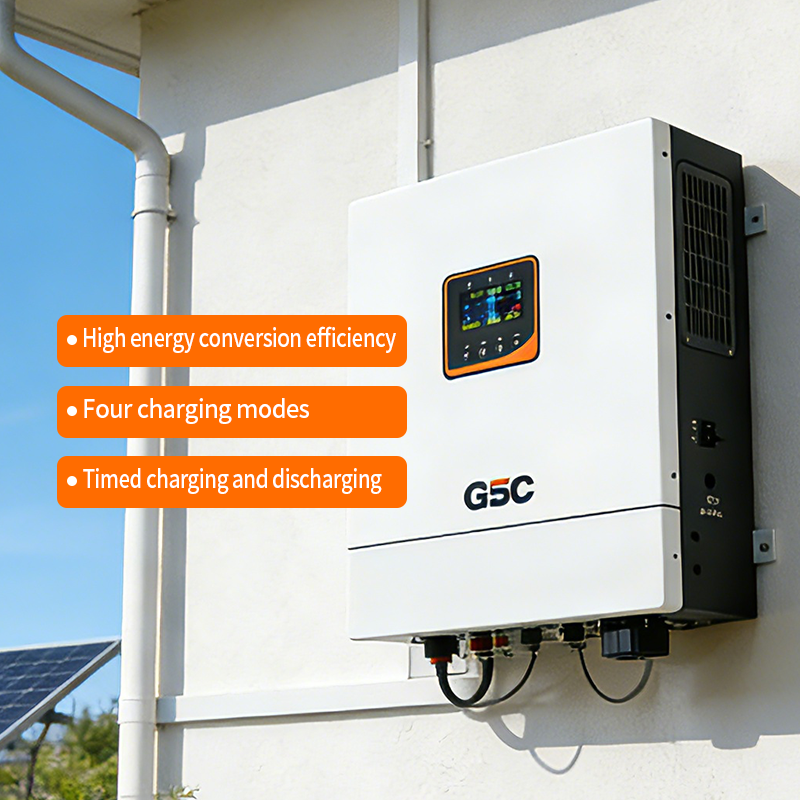
2) Validate BMS and firmware integration—ensure the battery management system communicates state-of-charge, temperature, and fault conditions reliably so the inverter can manage charge/discharge without abrupt shutdowns.
3) Demand operational evidence: ask for case studies or inspection reports from installations with comparable load profiles and climate. Field-proven systems reduce deployment surprises and justify premium components.
Final synthesis
Selecting a high-surge solar hybrid inverter for an uninterruptible micro-grid is about measurable margins: surge headroom, BMS fidelity, and documented field performance. These metrics steer procurement toward systems that keep lights and critical motors running when it counts. For many projects, the natural fit is a tested three-phase hybrid solution delivered by manufacturers who publish real-world data—solutions you can evaluate and trust like those from gsopower. Practical, proven, and ready to shoulder the unexpected.