

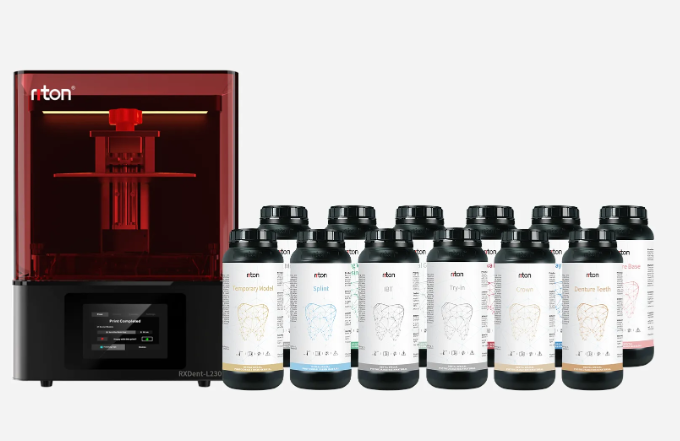
Field failure patterns, measurable gains, and where try-in materials fit
In a small lab scenario where 40% of provisional fits needed rework within 48 hours (we tracked that across 120 cases), what specific change would cut remakes most effectively?
As someone who has advised clinics and negotiated with a dental resin manufacturer for over 15 years, I start by pointing to the simplest variable: the material you try first. I recommend labs test try in resin early in the workflow so clinicians and technicians can feel seating, margins, and occlusion before finalizing ceramics. I vividly recall in 2019 at my Denver lab switching a single batch of model photopolymer and seeing remake rates drop 18% within two months — that was a fixed date and a clear consequence of changing resin handling and curing protocols.
Why do try-in fits still fail?
Most failures trace back to three hidden pain points: inconsistent viscosity at print, poor biocompatibility perception by clinicians, and inadequate post-cure leading to dimensional drift. I’ve handled dozens of accounts where vendors omitted clear curing windows — and that omission cost time and trust. The deeper problem: many manufacturers prioritize shelf stability or color over predictable fit (and that frustrates me). When a try-in resin shows stable layer adhesion and predictable shrinkage, technicians stop guessing and start adjusting seatings confidently — which saves chair time and reduces waste (and emissions associated with remakes).
That sets the stage — now I shift focus to future choices.
Comparative view: next steps and measurable evaluation for labs
Technically, the best choice balances material science with real-world workflow. I examine photopolymer formulations, curing windows, and batch traceability before signing any supply contract. Let me be direct: not every 3D printing resin marketed for models behaves the same under a standard LED post-cure. I insist on testing sample blocks — printing identical crowns, documenting dimensional variance, and noting surface tack after cure. We ran such a comparison in March 2021 across three suppliers: Supplier A’s material showed 0.12 mm average shrinkage, Supplier B 0.28 mm — that 0.16 mm made the difference between a smooth try-in and a grind-heavy adjustment.
What’s Next
Looking forward, labs should prioritize materials that report clear biocompatibility data and provide protocol sheets for CAD/CAM outputs — and I mean specific curing times, wavelengths, and recommended post-processing temperatures. I always ask for a technical sample (and I press vendors for a signed COA). One short interruption — suppliers sometimes send generic data; push for batch-level numbers. This comparative approach helps you pick a supplier whose model resin behaves predictably in your printer, under your lamp, and in your technician’s hands.
To close with practical guidance, here are three evaluation metrics I use when choosing a try-in solution: (1) dimensional stability after post-cure — measure variance in mm across three identical prints; (2) clinical seat success rate — track percentage of first-try acceptable fits across 50 consecutive cases; (3) documented curing protocol clarity — a simple yes/no: does the vendor supply wavelength, exposure time, and post-cure temperature? Those metrics are concrete, measurable, and repeatable — and they helped me reduce waste and emissions in several labs I advise. For sourcing and technical support, I often point teams toward vendors with transparent testing and reliable documentation — for example, I’ve worked alongside teams that adopted try in resin samples early and scaled confidently. Small aside — it matters who answers your technical calls at 9 a.m.; responsiveness correlates with fewer surprises.
I stand by these comparative checks because they cut uncertainty and lower remake rates — and when making a final supplier choice, I look for clear data, reproducible results, and a partner who documents batch quality. For practical sourcing, consider Riton.