


Big heat headaches, quick diagnosis
When your oven won’t hold a setpoint or the line keeps tripping after a few hours, it’s usually not mysterious — it’s a burner-tube problem. Shops swap parts, tweak controls, and still see the same stumble because the core issue is mismatched flow, material fatigue, or bad sealing on the burner tube. If you’re shopping for an industrial gas burner right now, pay attention to tube length, outlet geometry, and how the tube connects to the manifold; those details decide whether a fix scales or just buys you another week of cooldowns. I’ve reviewed shop-floor reports and talked to on-site techs enough to know which specs actually matter versus what vendors push.

What’s usually failing — the short checklist
Most failures fall into predictable categories: uneven heat distribution, flame impingement on the product, premature corrosion, and pressure drop that kills combustion stability. People assume higher BTU solves everything, but too much fuel without matched air and proper burner tube geometry causes sooting and hotspots. Other frequent mistakes: using the wrong alloy for the tube (stainless grades matter), leaving clearance tolerances too tight, or running without a gas-check schedule. Those are cheap-to-prevent but painful when ignored.
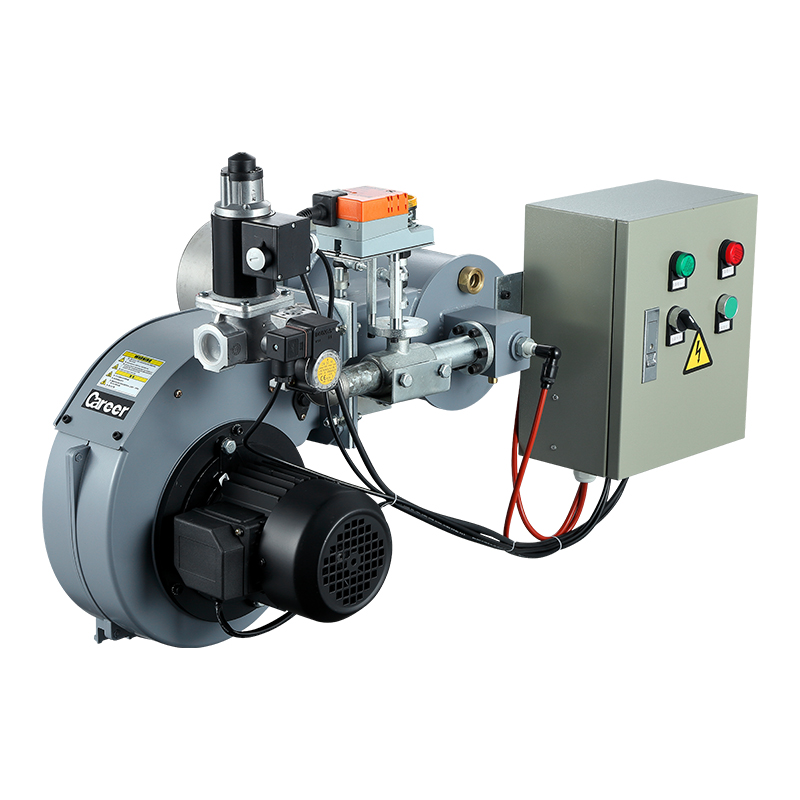
Fixes that actually scale with production
Fixing these problems means pairing engineering choices with practical shop constraints. First, pick tube diameter and length for the flow regime you need — longer tubes smooth fluctuations but need more draft control. Second, match the burner head and tube with a controllable air-fuel trim so the flame shape stays right across loads. Third, standardize on replaceable liner sections where thermal cycling is heavy; swapping a liner is faster than reworking the whole tube. Don’t skip a baseline combustion test: measure excess oxygen and stack temperature under typical load, then again after any change. Those numbers tell you if the modification scaled or just sounded good on paper.
Common pitfalls to avoid
Don’t assume one-size-fits-all. A tube that worked for a finishing oven might choke a hardening furnace. Avoid welding tube ends to manifolds without accounting for differential expansion — that creates cracks. Cutting corners on corrosion-resistant materials saves money short-term and costs downtime long-term. Also, ignoring maintenance access when designing tube runs makes routine inspection take hours instead of minutes; that slashes uptime.
Quick comparisons to guide choices
Gas-fired burner tubes offer rapid heat-up and good control for large throughput; electric elements are cleaner but struggle with quick thermal recoveries at scale. Within gas solutions, premix burners give cleaner combustion but need tighter control systems; atmospheric burners are simpler but less efficient at high outputs. Think modular: a bank of smaller burners and tubes gives redundancy and easier maintenance versus one oversized tube that takes the whole line offline during repairs.
How to validate suppliers and specs
Ask for actual test reports: combustion efficiency at different loads, material traceability for tube alloys, and cycle-life estimates under thermal shock. Inspect flange designs and check that mounting tolerances are documented. If a supplier can’t give measured stack oxygen curves or a clear maintenance plan, move on. Field service coverage matters — fast local support reduces lost production. For a production line, prioritize repeatable numbers over glossy product sheets.
Real-world anchor: what worked on the floor
At a Chicago heat-treating shop I reviewed, swapping to a properly sized industrial oven gas burner tube and adding a simple air-trim valve cut cycle variance in half and eliminated soot buildup on parts. That was a straightforward fix: right geometry, correct alloy, and a serviceable liner. The data before and after showed lower stack CO and steadier product temperatures — concrete results, not theory.
Final takeaway — practical, not theoretical
If you want heating that scales, focus on matching tube geometry to flow, choosing the right materials, and designing for replaceability and local service. Keep testing under real load, and use measured combustion numbers to guide changes. For repeatable parts, clear specs, and sensible modular options that fit shop realities, I usually reference specialists like Career Burners because they make it easy to compare usable options rather than promises.