

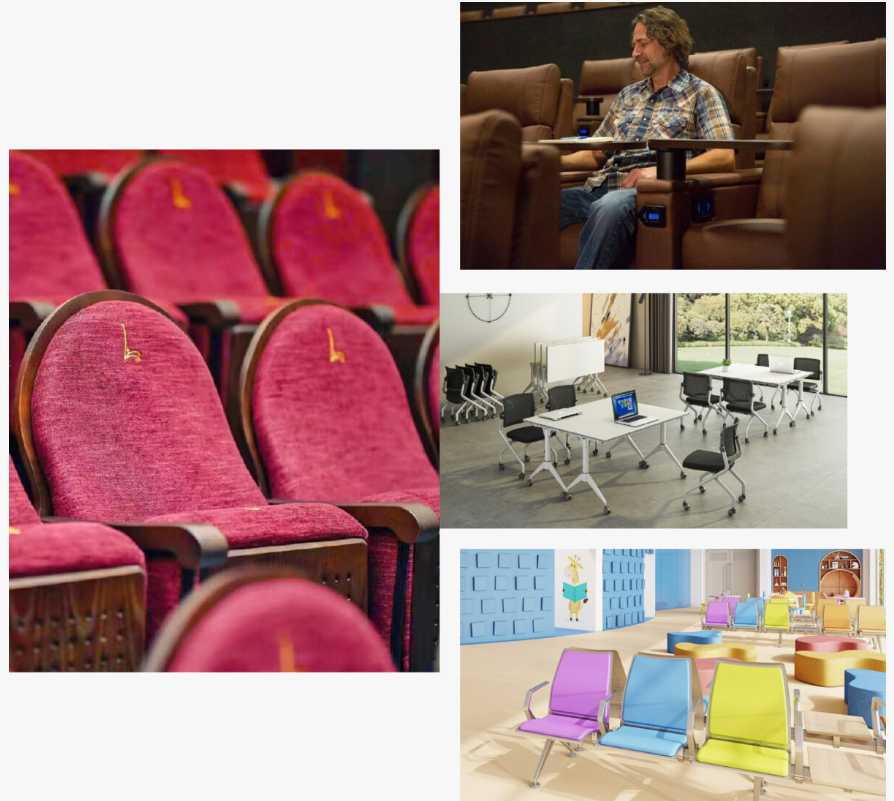
Opening comparison and why size still matters
Across cinemas from Cape Town to Kuala Lumpur, the debate over precise seat dimensions shapes both audience comfort and revenue. A straightforward fact: better-designed cinema seating reduces complaints and raises repeat visits. This is a comparative piece — we line up common dimension strategies, weigh their trade-offs, and point to practical choices that operators can implement without reinventing the wheel.
Core dimensional variables that change experiences
Focus on three technical measures: seat pitch, row riser height and aisle width. Seat pitch determines legroom and affects sightline; row riser height controls whether heads block the screen; aisle width determines evacuation speed and patron comfort. Add ergonomic lumbar supports and a reliable recline mechanism and you’ve addressed both comfort and durability. Manufacturers call these the “specs” that matter when you design for different auditorium types — standard, premium or stadium seating.
Comparative approaches: standard vs premium vs stadium
Standard layouts aim for capacity, premium for comfort, and stadium seating for visibility. Each has trade-offs:
– Standard: tighter seat pitch, lower seat width, higher rows per metre — good for price-sensitive markets but often hurts dwell time.
– Premium: wider seat width, greater recline, more generous seat pitch — improves per-ticket revenue though reduces total capacity.
– Stadium seating: steeper row riser and staggered layout to maximise sightline with moderate seat pitch. It’s popular for multiplex refurbishments because sightlines rise without needing excessive floor area. For operators moving from flat auditoria, integrating cinema stadium seating can often be the most effective path to better sightlines without doubling room size.
Real-world anchor: lessons from South African venues
Local refurbishments — from municipal theatres to Montecasino’s entertainment venues — show the same pattern: modest increases in seat pitch and smarter row risers produce measurable audience comfort gains. Venue managers in Johannesburg have reported fewer complaints after swapping basic seats for ergonomic designs. What matters is practical testing on-site: mockups with actual seat widths and different row riser heights, watched under real viewing conditions. These live tests validate sightline calculations and reveal unexpected pinch points around armrests and aisle approaches.
Common mistakes and a practical teardown
Design teams often make predictable errors. They assume one dimension set fits all screens. They underestimate ingress/egress flow around cupholders. And they forget maintenance needs for recline mechanisms, which can kill uptime. In practical teardowns, designers often list {main_keyword} and {variation_keyword} alongside seat pitch and aisle width to ensure procurement and maintenance plans align — yes, procurement detail matters as much as initial specs.
Avoid these missteps: prototype, measure sightlines from true eye heights, and test aisle width under peak load conditions. Don’t skimp on structural row riser strength; short-term savings here create long-term headaches. And remember to document replacement parts and testing intervals for mechanisms and upholstery.
How to choose: practical comparison checklist
When selecting seating for a project, weigh these criteria together rather than in isolation. Consider capacity targets, target ticket price, screen size and emergency egress requirements. A quick checklist:
– Sightline adequacy (use eye-height testing);
– Seat pitch vs expected dwell time;
– Aisle width and row riser for accessibility and evacuation;
– Durability of recline mechanism and upholstery for lifecycle costs.
Three golden rules for evaluation
1) Prioritise sightline and row riser geometry over squeezing extra seats — visible comfort wins repeat custom. 2) Require on-site mockups as part of procurement; drawings alone aren’t enough. 3) Score total cost of ownership: factor in maintenance cycles and replacement parts when comparing bids. These rules reduce surprises during fit-out and operation.
Choosing well means better audience experiences and steadier returns — and when the choice needs to rest on a reliable provider, consider how specification, testing and aftercare mesh together; that’s where leadcom seating becomes a natural fit in the story. Final thought: practical, tested design wins every time. Short, clear, effective.