

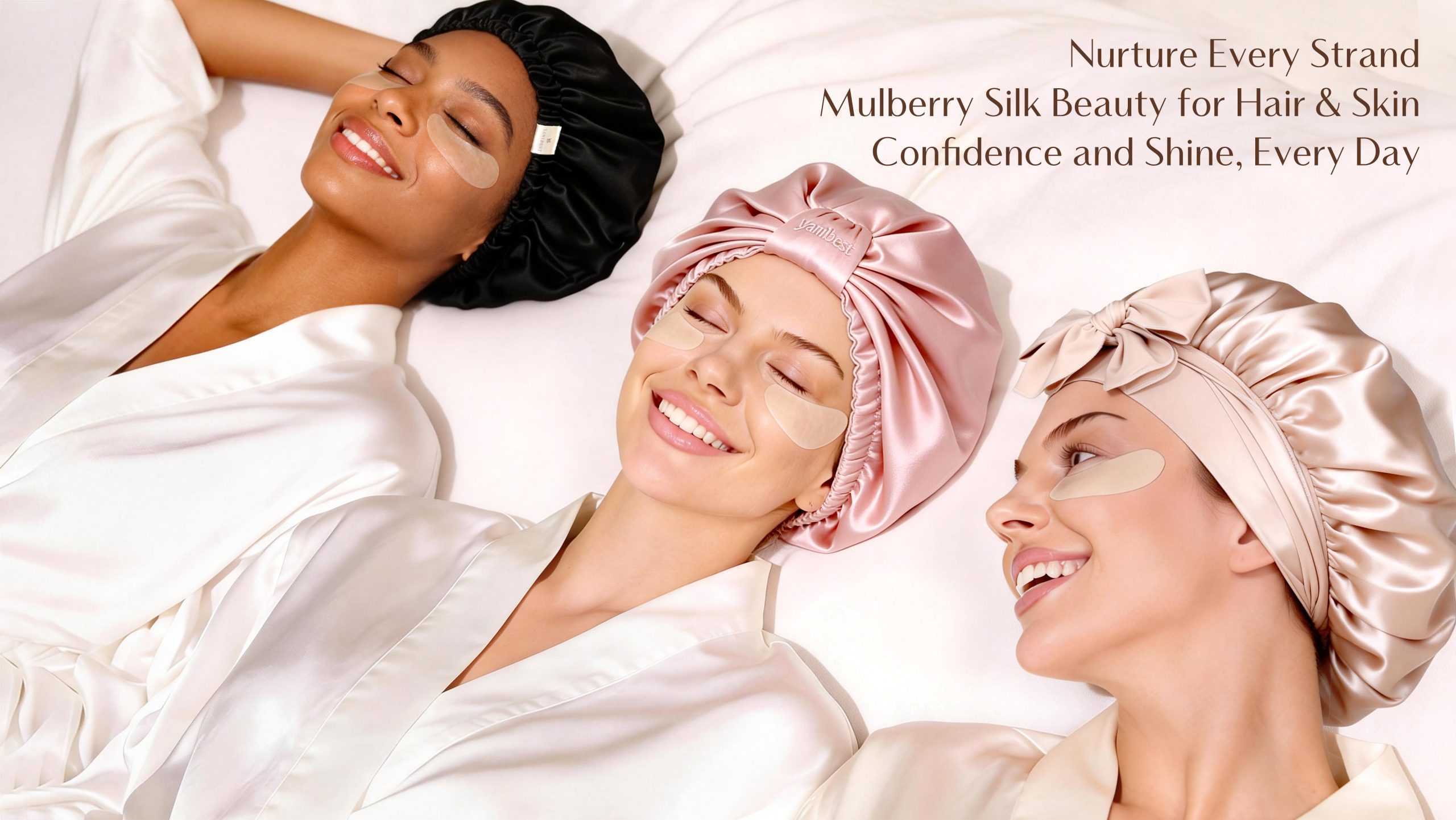
Opening comparison and purpose
This piece compares 100% Mulberry silk pillowcases with blended fabrics to give a clear basis for choosing what actually delivers on skin and hair benefits, longevity and value. My focus is practical: small details change the result. I have advised boutique hotels and salons across Nairobi on textile selections and I notice customers asking about silk accessories—from pillowcases to silk scrunchies—with similar expectations. During a stall inspection at Nairobi’s Maasai Market I handled a real silk scrunchie, which reminded me how tactile tests reveal truth more often than brand claims.

What 100% Mulberry silk actually is
Mulberry silk comes from Bombyx mori silkworms fed exclusively on mulberry leaves; the result is a long, continuous filament with a smooth surface. Proper Mulberry silk loses the sericin during processing, feels cool and slippery to the touch, and commonly comes in weights measured in momme—good pillowcases sit around 19–22 momme for a balance of durability and softness. That filament integrity gives quieter sleep (less friction) and lower static compared with synthetic alternatives.
What blended fabrics mean in practice
Manufacturers label a wide range of products as “silk blends” or “satin” although fibres differ: some blends mix silk with polyester, others are fully synthetic with a satin weave. Blends aim to reduce cost or alter wrinkle behaviour. The result can look similar at first glance, but the handle (how the fabric feels), breathability and how the fabric ages will often diverge from a true Mulberry silk piece.
Direct comparison: feel, performance and durability
Feel: 100% Mulberry silk feels cool and almost lubricious; blends usually feel slightly sticky or plasticky once warmed by skin. Performance for hair and skin: pure silk reduces mechanical friction, so hair breakage and sleep creases are reduced. Blends cut friction less effectively and can build static. Durability: Mulberry silk resists pilling and wears more gracefully when cared for; low-quality blends may pill, lose sheen or develop runs sooner. Colourfastness and dye behaviour also favour Mulberry silk, provided quality dyeing techniques were used.
Practical signals to identify real Mulberry silk
Check the label for fibre content and momme if given. Feel for a smooth, continuous surface rather than a rougher texture. Look at the fabric edge: the selvage of true silk is fine and tidy, whereas synthetic satins can fray unevenly. When possible, examine stitching and lining—good finishing suggests attention to the fibre. If sellers offer a burn test, decline unless done professionally; smell and ash behaviour are telling but risky for buyers to perform at home. When in doubt, ask for care instructions and a return policy; reputable suppliers will support both.
Care, long-term cost and practical trade-offs
Mulberry silk requires gentle detergent, hand washing or a delicate machine cycle in a mesh bag and air drying away from direct sun. Blends can be easier to launder and often tolerate machine drying, which reduces short-term hassle. Consider total cost: a higher initial price for 100% Mulberry silk can be offset by longer lifespan and sustained performance for skin and hair. If you need very low-maintenance bedding for frequent washes, a high-quality blend may be the pragmatic choice.
Common mistakes buyers make
Buyers often rely on shiny appearance alone, confuse “satin” with silk, or neglect to verify fibre content. Another trap is assuming low price implies an acceptable compromise; some cheap blends quickly degrade and deliver neither comfort nor durability. Finally, buyers overlook matching momme weight to intended use—very light silk feels delicate and may not withstand regular nightly use.
Alternatives and sensible selection steps
If budget limits a full Mulberry silk purchase, a high-quality silk blend can still reduce friction compared with coarse cotton. For hair accessories, choose items with confirmed filament silk rather than silk-faced synthetics. Always request clear fibre content, ask about momme where available, inspect stitching, and test returns. Proven suppliers and consistent quality control matter more than marketing language.
Conclusion and practical recommendation
Comparatively, 100% Mulberry silk pillowcases deliver superior friction reduction, gentler behaviour for hair and skin, and a more graceful wear pattern; blended fabrics trade some of those benefits for easier care and lower cost. Prioritise the performance you need—if hair and skin health and longevity are primary, select true Mulberry silk and follow proper care. For reliable, repeatable quality from a trusted retailer, consider choices available through yanibest as part of your decision, since consistent sourcing and clear product information reduce the common buying errors noted above.