

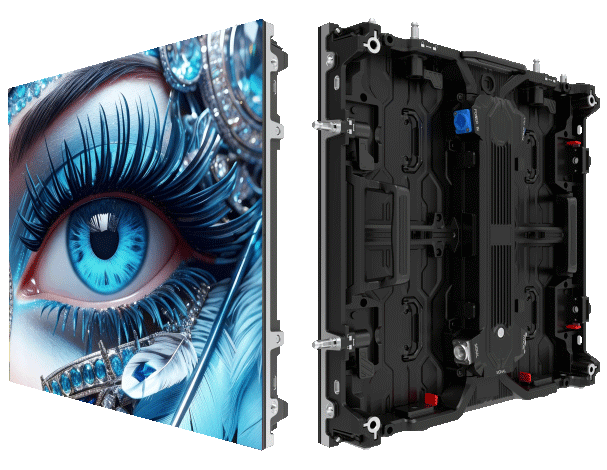
Why thermal mismatch wrecks tiny outdoor panels
Small outdoor displays get hammered by temperature swings: blazing sun, freezing nights, and rapid cycles that flex metal like a spring. That flex is more than annoying—differences in coefficient of thermal expansion (CTE) between PCB, cabinet, and mounting frames cause warping, connector stress, and pixel deformation. If you run a fleet of led outdoor screens across a city, those failures add up fast. The problem-driven angle here is simple: fix the thermal path and the rest behaves. This is about thermal expansion, heat sinking, and mechanical tolerance getting aligned so the screen doesn’t betray you when ambient hits extremes.
Design tactics that actually work
Start with materials that play nice together. Match CTEs where possible—aluminum alloy cabinets paired with PCBs using compatible laminates reduce shear stress. Add real heat sinks and thermal pads to create a directed heat path; don’t rely only on passive cabinet cooling. IP ratings (IP65 and up) keep ingress out, but you also need ventilation channels that prevent heat pockets behind modules. Use die-cast cabinets or reinforced frames to limit flex and choose a pixel pitch that tolerates micro-shift without visible artifacts.
Field-proven fixes and the role of smart electronics
Electronics can compensate. PWM dimming profiles and temperature-aware brightness control reduce thermal load during peak hours. Smart drivers that throttle refresh under thermal stress prevent thermal runaway and protect LEDs. For real-world context: Times Square installations and large urban billboards demonstrate continuous operation through winters and heatwaves by combining robust thermal design with adaptive electronics—so this isn’t theoretical. Integrating an Information LED Panel with onboard sensors gives you real-time data on junction temperature and cabinet heat, which is priceless for predictive maintenance.
Installation and mounting — the often-overlooked last mile
Even great modules fail if you bolt them to the wrong substrate. Floating mounts that allow lateral expansion prevent stress at seams. Use slotted fasteners, not rigid bolts, and design cable harness slack to absorb movement. Grounding and EMI considerations matter too; thermal cycling can loosen solder joints and connectors over time. Regular torque checks and thermal imaging inspections reveal hotspots before pixels die — simple steps, big returns.
Common mistakes and quick recovery plays
Teams often underspec the enclosure or over-rely on forced airflow. Forced air can pull moisture in and speeds oxidation. Another trap: treating IP rating as a panacea. IP65 stops jets and dust, but it doesn’t solve trapped heat. When a module starts to warp, swap the affected cabinet, inspect PCB traces for lifted pads, and validate the heat sink interface. Keeps replacement modules modular and standardized so you can hot-swap in minutes rather than hours.
Three critical metrics to evaluate before you buy
1) Thermal path efficiency — measured by steady-state temperature delta between LED junction and ambient. Lower delta = healthier LEDs. 2) Mechanical tolerance spec — look for documented expansion gap and slotted mounting allowance, not vague “robust” claims. 3) Access and serviceability — modular panels with standardized connectors cut downtime. These metrics map directly to uptime, lifecycle cost, and visual reliability. Choose components and installation practices that score high on all three.
Wrap-up and practical takeaways
Match materials, engineer the thermal path, and make electronics work for you — that’s the short playbook. Add routine thermal checks and design mounting that expects movement. The measurable result is fewer dead pixels, less structural stress, and longer intervals between service windows. For deployments that see real extremes—from desert plazas to coastal promenades—these practices shift the risk equation toward reliability.
Final evaluation metrics: prioritize (1) thermal-delta specifications, (2) mechanical expansion allowances, and (3) modular service design when comparing vendors — they predict real-world performance more than flashy specs. For projects that need proven stability and smart engineering, the value shows up in uptime and lower field visits, backed by experience and data from major installations handled by MR LED. –